




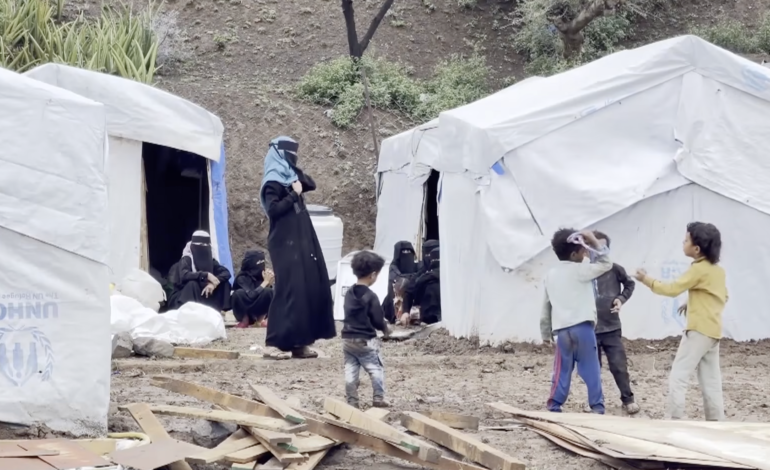

Over 2,000 people have fled to Djibouti’s northern shores until Sunday from Yemen to escape hostilities.
The International Organization for Migration’s (IOM) Displacement Tracking Matrix (DTM) says displacement in Yemen has now reached 85,818 people, up sharply in recent days as fighting continues along the West Coast.
Families are being forced from their homes, and some are now fleeing the the Arab world’s poorest country altogether landing at scattered points along the coast near Obock.
“Behind every number is a family who’s lost everything,” said Amy Pope, IOM Director General, who noted that many of them have been displaced multiple times.
Inside Yemen, families continue to flee multiple times, some for the second or third time in 12 years of conflict, with almost nothing left.
Djiboutian authorities are leading the response, mobilizing the Navy, army, police and health services, with support from IOM and UN partners, the agency said.
Many of these arrivals are women and young children, and they have been transported to the Markazi site in Obock, where they are receiving water, high-energy biscuits and hot meals. More are expected to flee as fighting intensifies.
“People are crossing the sea with nothing because they have no other choice left. Yemen is a country torn by poverty and conflict, and it cannot carry this crisis alone. I call on donors to scale up support now, for those arriving in Djibouti and for the communities in Obock receiving them,” Pope said.
Fighting is escalating rapidly along the West Coast and South Taiz frontlines. Taiz remains the hardest hit, with 9,280 households, or nearly 56,000 people, displaced from districts including Jabal Habashy, Al Ma’afer, Maqbanah, Mawza and Al Wazi’iyah, IOM said.
Lahj follows with 3,225 households, or over 19,000 people, most from Al-Mudharibah district, with numbers rising in recent days. Al Hodeidah has recorded 1,374 households, or over 8,000 people, displaced, largely from Hays. Aden has also been affected with 424 households or over 2,500 displaced people being hosted there.
Roads in Yemen are increasingly inaccessible due to ongoing fighting, and communications in affected areas remain disrupted, making it harder to reach people and assess needs, the agency noted calling for safe, unimpeded humanitarian access, and for all parties to protect civilians, humanitarian workers, and the supplies, vehicles and facilities needed to deliver aid.
IOM said the situation remains volatile and unpredictable vowing it will continue to monitor developments closely and report further updates as they become available.
The latest changes in the country’s 12-year conflict came as the Iran-aligned Houthi militants advance to south along Yemen’s coast, increasing their ability to choke off the Bab el-Mandeb Strait at the mouth of the Red Sea.
This advance could give Iran potential leverage over both of the region’s main oil-shipping corridors across crucial Middle East waterways, creating a major new problem for trade activities in Africa as it intensifies the ongoing US-Iran war.
Related Stories


Related Stories


Discover more from Matter Zone
Subscribe to get the latest posts sent to your email.