




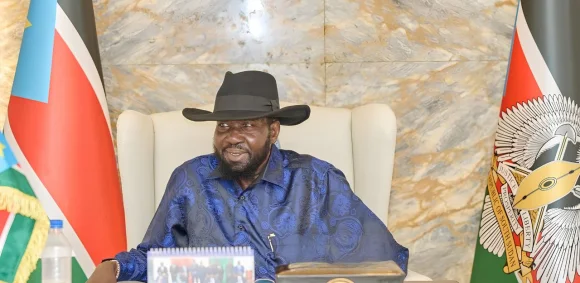

The President of South SudanSalva Kiir has dissolved the country’s transitional unity government and appointed a caretaker administration ahead of the country’s first-ever national elections.
In a decree signed Monday, and read out by the national broadcaster, Kiir ended a power-sharing arrangement set up under a 2018 peace deal.
According to the new law, five vice-presidents, ministers and local administrators are removed, while the parliament, national and state governments are also dissolved.
The decree came a day after the parliament approved changes to the National Elections Act that allowed Kiir to stay in power during the election period, while removing all vice presidents, who were appointed under the 2018 peace deal.
The main opposition alliance led by Kiir’s political rival Riek Machar, has rejected the changes.
Machar, who was sacked as vice-president last year, is under house arrest and charged with treason remaining on trial at his residence and court proceedings in the capital Juba.
The changes, which analysts warned to offered Kiir unfettered control, would usher the east African country towards its first-ever elections scheduled for December 22, without first completing a permanent constitution and census.
Kiir is named as the main presidential candidate of the Sudan People’s Liberation Movement (SPLM), with no prominent competitor vying for presidency.
Earlier this month, Kiir made major constitutional amendments, known as the Transitional Constitution of the Republic of South Sudan, 2011 (Amendment No. 13) Act, 2026, aimed at removing key legal obstacles to the conduct of the polls.
The bill nodded by Kiir was passed by the Transitional National Legislature in accordance with Articles 55, Sections 2 and 3 of the Transitional Constitution.
The amendment makes key changes to the country’s constitutional framework, including delinking the permanent constitution-making process and the National Population and Housing Census from the conduct of national elections.
Authorities say the changes remove key obstacles that could delay the electoral process and allow South Sudanese citizens to exercise their constitutional right to elect leaders and a government of their choice.
Meanwhile, the African Union Peace and Security Council expressed concern over “significant funding and administrative shortfalls” facing the country’s electoral bodies.
The AU called on member states, international partners and donors to help close a funding gap for the elections, setting October as a deadline for submitting concrete contributions to its Commission.
Related Stories


Related Stories


Discover more from Matter Zone
Subscribe to get the latest posts sent to your email.