




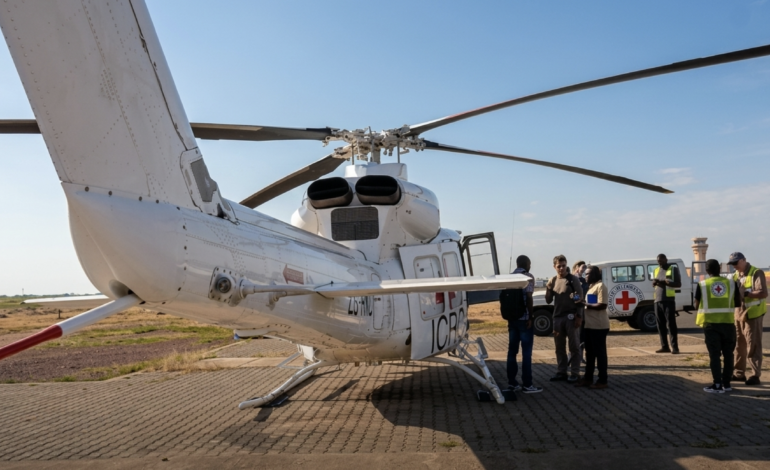

The International Committee of the Red Cross (ICRC) has said its evacuations of wounded patients rise by more than half amid renewed fighting in South Sudan.
266 wounded patients have been evacuated across South Sudan during the first six months of 2026, an increase of more than 50% compared with the same period last year, as renewed fighting placed growing pressure on trauma services, according to ICRC.
The Swiss based international humanitarian agency said the rise in evacuations comes as conflict and violence intensified since late 2025 and caused thousands of families to flee their homes, lose their livelihoods and safe access to health-care.
The fighting also led to significant loss of life and injuries, increasing demand for life-saving care.
As South Sudan marks 15 years of independence, humanitarian needs are deepening, fuelled by conflict, violence and insecurity, climate-related shocks, and arrivals of people fleeing conflict in neighbouring Sudan, the agency said.
It also noted shrinking funds to help those in need that leads to many are left without much-needed assistance.
“Conflict is not getting any better and the humanitarian needs are also on the rise. This is further complicated with the fact that the funding has gone down. So, service provision at all levels of health-care is reduced, and this causes a lot of strain in the hospital levels,” explained Rose Ochieng, ICRC health coordinator in South Sudan.
Since 2014, more than 5,000 patients have been evacuated by the ICRC for life-saving surgical care across South Sudan. The majority of patients are transported by air from across the country to Juba Military Hospital, one of South Sudan’s main trauma referral centres, where surgeries in the first half of the year increased by nearly 30 per cent compared with the same period in 2025.
As a result, the ICRC said it supported surgical department is consistently operating at more than 100% capacity.
ICRC warned that access to life-saving health-care remains severely limited in many parts of the country. In areas where fighting is recurrent, including remote regions where mobile connectivity is intermittent and roads are poor, individuals and communities struggle to reach health facilities.
The pressure on trauma care extends beyond evacuations; to referral systems, surgical services, rehabilitation, mental health and follow-up care, while national capacity to provide these services is under growing strain, the agency noted in a statement.
Fifteen years after independence, the priority is to ensure that people in need of life-saving surgical care can access it, regardless of who they are or where they come from.
ICRC also said that it will continue to work alongside health authorities and partners, especially the South Sudan Red Cross (SSRC), to ensure that life-saving care remains accessible to those affected by conflict.
The organization also called on all parties to the conflict to uphold their obligations under international humanitarian law, to respect and protect health-care workers and medical facilities, to take all possible measures to collect and evacuate the wounded and sick without adverse distinction.
They must also ensure access to life-saving medical care without obstruction, and allow and facilitate the rapid and unimpeded passage of humanitarian assistance to civilians in need, it added.
Related Stories


Related Stories


Discover more from Matter Zone
Subscribe to get the latest posts sent to your email.