




OSC Secretary-General resigns citing institutional default as staff cry foul
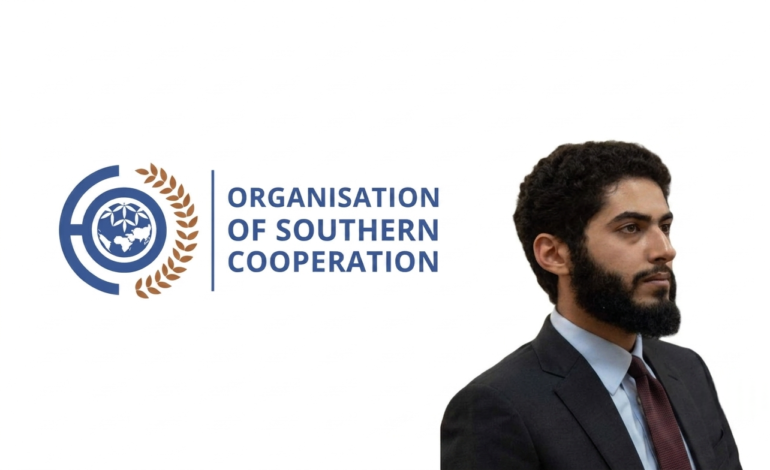

The Secretary-General of the Organisation of Southern Cooperation (OSC), Manssour Bin Mussallam has resigned from his role citing persistent institutional default.
Mussallam announced his decision in a statement on Monday indicating persistent default, and the broader conditions which have rendered his task increasingly impracticable.
“I have concluded that further participation serves neither the Organization nor the stakeholders whose rights must be vindicated,” he said.
The Secretary-General has invited Member States to convene on 13 August 2026, with the recommendation that they appoint, in a caretaker capacity and with effect from that date, an official of a Member State government to assume responsibility for the remaining closure proceedings.
“For my own part, I shall henceforth take my place alongside every other aggrieved stakeholder — staff, scholarship recipients, suppliers – whose dues remain outstanding and must be settled in full,” he noted in the statement.
The executive further indicated that he is taking the decision with the clear conscience of having discharged his duties, and every commitment within his power.
“I now call upon Member States, as I have repeatedly done, to do the same. What remains owed is owed still, and must be honored. That, and nothing less, is what the Greater South owes its own,” he stressed.
The caretaker executive who indicated that he did the best of his abilities while member states failure to fulfil promises.
He first submitted his resignation in December 2025, indicating institutional unsustainability and morally untenable situations. However, an extraordinary session of the General Assembly was called that same month that resolved to discontinue the operations of the OSC.
The move was aimed at preventing the accumulation of further financial liabilities and each Member State was accordingly expected to settle its existing arrears in full. Mussallam then agreed to stay with the organization through June 2026 to oversee the closure process, pending payment.
However, on Tuesday the Staff Rights and Justice Initiative (SRJI) of OSC has issued a statement refuting the claims made by Mussallam. The group says his statement seeks to place responsibility solely on the Member States, and omits a fundamental reality.
“The Secretary-General himself has been the Chief Officer and legal representative of the OSC since its establishment and therefore bears the responsibility for the actions, decisions, and failures that have occurred under his leadership. Leadership carries accountability, especially during a crisis,” they said.
The joint staff statement accused Mussallam of failing to provide any meaningful updates about the closure process and possible timeline for payment of staff salaries, benefits and entitlements for over one and half a year.
“The Secretary-General now decides to withdraw from the process without addressing the core matter: payment of staff salaries, benefits and entitlements without further delay,” the group indicated that the staff members have worked for more than seventeen months without salaries but only getting repeated assurances that obligations would be fulfilled.
The SRJI accused the withdrawing Secretary-General as portrayal of himself “as another aggrieved party overlooks his central role in the management of the Organisation during the period in which these violations of fundamental human rights have occurred.”
“Responsibility cannot be shifted entirely to Member States when executive leadership bears legal, fiduciary, and moral duties to safeguard the Organisation and its employees,” they stressed noting unchanged demand for full payment of all outstanding salaries and entitlements, accountability for those responsible, and justice for every affected staff member and stakeholder.
OSC was established on 29 January 2020 by countries and organisations from across the Global South at the International Summit held in Djibouti. Officially opened its headquarters in Ethiopia on May 2023, the intergovernmental organisation focuses on balanced and inclusive education and a third way of development. It was initially established following the evolution of the Organization of Educational Cooperation.
Mussallam is a Saudi national whose biography says he founded and led the Education Relief Foundation (ERF) in Geneva, Switzerland from 2016 to 2020 with the purpose of developing, promoting and incorporating a balanced and inclusive approach to education (BIE), based on the four pillars of intraculturalism, transdisciplinarity, dialecticism and contextuality.
Related Stories


Related Stories


Discover more from Matter Zone
Subscribe to get the latest posts sent to your email.