




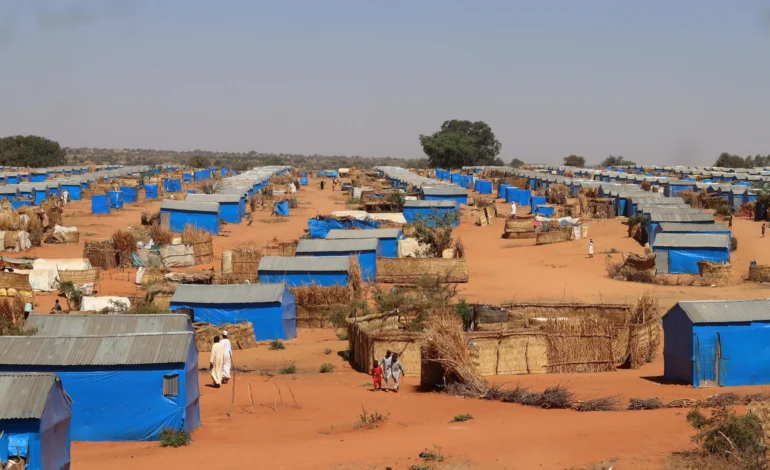

A rapidly spreading dual outbreak of measles and meningitis C have been reported among Sudanese refugees sheltered in eastern Chad.
Médecins Sans Frontières (MSF) called for an urgent response warning the outbreak has intensified in overcrowded refugee camps along the Chad–Sudan border.
MSF said its teams in coordination with the Ministry of Health, are responding to the dual outbreak amid a growing influx of refugees fleeing the war in Sudan under extremely difficult conditions.
Since January 2026, more than 1,500 patients have been admitted to MSF isolation units, says MSF.
The humanitarian agency stated that in Adré, near the Sudanese border, between March and April 2026, at least 212 meningitis cases were recorded among children in MSF-supported facilities, with 25 deaths, representing a fatality rate of nearly 12%.
“Bed occupancy for meningitis is close to 100%, saturating our capacity and compromising care for other conditions,” said Isabelle Kavira, MSF’s medical activity manager in Adré, one of the worst-affected areas.
MSF warned a health system stretched beyond its limits, where even treatable conditions are becoming life-threatening due to lack of space, staff, and resources.
The outbreak is unfolding within the broader humanitarian crisis triggered by the ongoing conflict in Sudan, which has forced more than 1.3 million people to flee into neighbouring Chad. Many of these refugees are living in densely populated camps with limited access to clean water, sanitation, and medical care.
These conditions create an ideal environment for infectious diseases to spread quickly, particularly among children whose immune systems are already weakened by malnutrition and displacement.
In Adré the situation has deteriorated sharply in just a few weeks, according to MSF, measles cases are rising rapidly where16 cases in January, 371 in March, and already 161 cases in just the first two weeks of April. Meningitis is following the same trend: 18 cases in January, 109 in March, and 101 cases in the first two weeks of April.
“The vast majority of children affected by meningitis present severe forms,” said Léa Ledru, MSF coordinator in Adré. “Our teams are forced to move constantly from one isolation unit to another.”
The crisis is further exacerbated by the continued arrival of refugees from Sudan, where measles and meningitis outbreaks are ongoing.
The outbreak also exposed the fragile state of disease preparedness across Africa and raising urgent concerns about cross-border transmission into neighbouring countries.
In Africa, it is part of a wider pattern associated with the so-called “meningitis belt,” a region stretching from West Africa to the Horn of Africa, where outbreaks tend to occur during dry seasons.
In the camps, overcrowding, limited access to water and healthcare, and malnutrition facilitate rapid transmission and increase the risk of severe complications, particularly among children under five.
As of April 2026, nearly 926,000 Sudanese refugees were recorded in Ouaddaï, Sila, Wadi Fira and Ennedi Est, placing additional strain on already fragile health services.
Related Stories


Related Stories


Discover more from Matter Zone
Subscribe to get the latest posts sent to your email.