




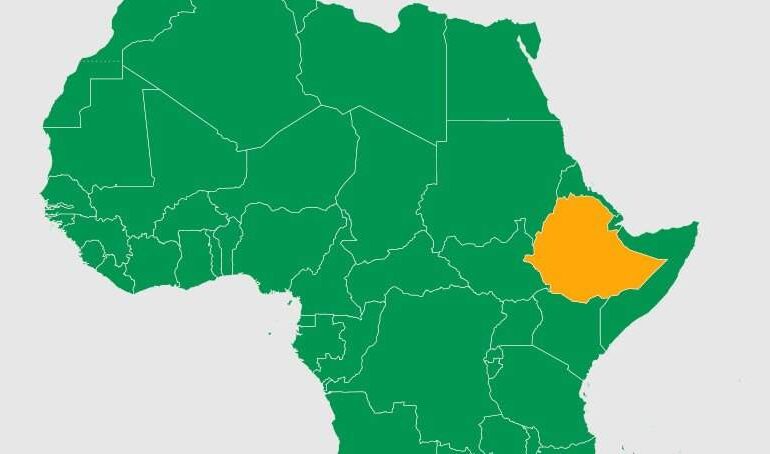

Ethiopia is set to hold its seventh general election on 1 June 2026 amid armed conflicts and political fragmentation.
Despite officials claim that more than 54 million people have been registered to cast their vote, the process has raised questions over voter participation and legitimacy and the future of the country’s multi-ethnic federal system.
The country’s electoral board has said out of the 547 national parliamentary seats, 46 seats will not be contested in Tigray region and in parts of Amhara region, where political fragmentation and armed conflicts are observed.
Rebels in Amhara region previously denounced the election and warned against any attempt to participate.
The European Union (EU) abstained from deploying an official Election Observation Mission (EOM), while the Intergovernmental Authority on Development (IGAD) and African Union (AU) have announced the deployment of their missions ahead of Monday’s election.
With wide control of the federal and regional institutions, Prime Minister Abiy Ahmed’s Prosperity Party (PP) remains by far the strongest political force to secure dominance.
The election has been criticized for lacking broad political inclusion, where more than 45 opposition parties are heading to contest.
The ruling PP aims to solidify its rule over Africa’s second most populous country and a key regional actor in the Horn of Africa.
Related Stories


Related Stories


Discover more from Matter Zone
Subscribe to get the latest posts sent to your email.