




Equatorial Guinea, Gabon end half-century territorial dispute
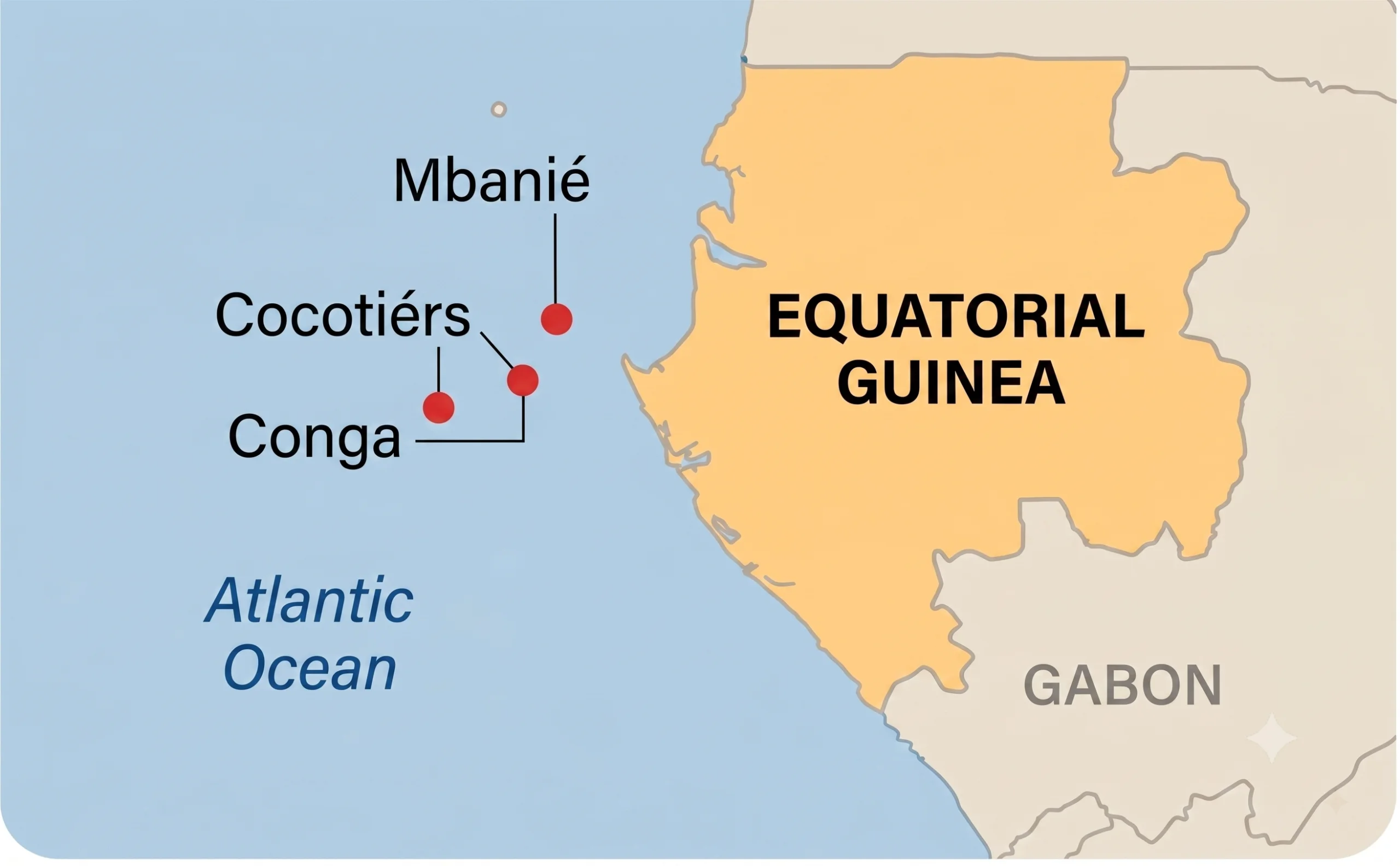

Equatorial Guinea and Gabon have officially ended 50-years of territorial dispute over three small uninhabited but oil-rich islands.
The new development came on Tuesday as the African Union (AU) Commission hosted the signing ceremony of the Joint Engagement Agreement between the two on the implementation of the Judgment of the International Court of Justice (ICJ).
The Agreement marks an important step towards the peaceful implementation of the Judgment and the resolution of the territorial dispute between the two central-west African countries.
“The Agreement reflects a shared commitment to dialogue, cooperation, good neighbourliness and the peaceful resolution of disputes in the spirit of African unity,” said Mahmoud Ali Youssouf, Chairperson of the African Union Commission.
The core disagreement involved sovereign claims over the 30-hectare island of Mbanié and the smaller islets of Cocotiers and Conga, located in Corisco Bay.
After repeatedly failing in efforts to find a diplomatic solution, the two countries went to the UN Court in 2021, and The Hague benched ICJ on May 2025 ruled in favor of Equatorial Guinea over the ownership of the three islands.
According to the ruling, the 15-judge panel found a 1900 treaty between Spain and France, which divided up colonial holdings, to be the ultimate authority.
Despite this ruling Gabon was entitled to the islands as per a later agreement known as the 1974 Bata Convention, however, The Hague court dismissed it as “not a treaty having the force of law.”
Amid Equatorial Guinea’s debunking of the convention Gabon failed to produce an original copy of the document for the court.
Simeon Oyono Esono Angue, Minister of Foreign Affairs, International Cooperation and the Diaspora of Equatorial Guinea, underscored the historic responsibility shared by both countries saying that “Africa is watching us. The world is watching us. Our peoples are watching us.”
President of the Gabonese Constitutional Court Dieudonné Aba’a Owono also noted that his country sees the deal beyond the legal significance saying that “we view it as an act of mutual trust and a strong political commitment towards the preservation of peace in Central Africa.”
“In a continental context marked by multiple security challenges, this approach demonstrates that dialogue and cooperation remain the most effective instruments for preventing tensions,” he added.
Gabon took over the largest island, Mbanie from Equatorial Guinea in 1972 in a military skirmish. The dispute gain new momentum as oil was discovered in coastal waters.
Both countries are highly fossil fuel dependent countries but production from existing areas has been in decline in recent years.
Related Stories


Related Stories


Discover more from Matter Zone
Subscribe to get the latest posts sent to your email.