




Bill Gates praises Rwanda’s health dev’t model, calls African ownership
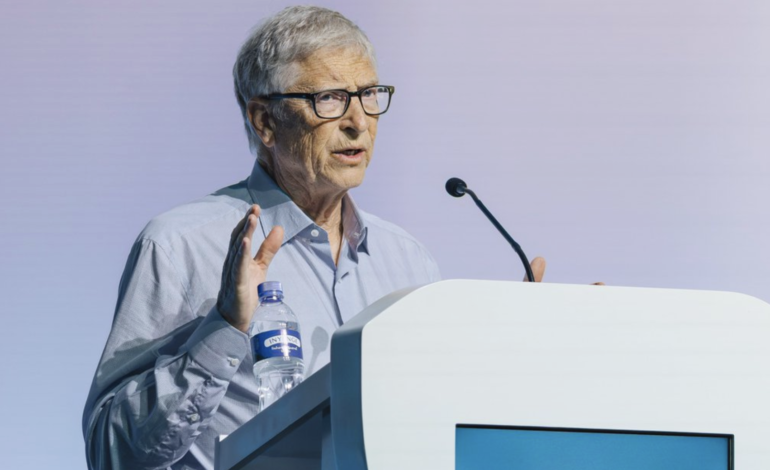

American philanthropist and Gates Foundation Chair Bill Gates has praised Rwanda’s long term investment in healthcare, innovation, and strong public institutions.
His remark came during a visit to the University of Global Health Equity (UGHE) in Butaro – a rural community in northern Rwanda, describing the country’s development journey as a model with lessons for Africa.
At the inaugural of Paul Farmer Butaro Dialogues on Health Equity and Innovation, Gates joined a forum focused on advancing maternal, newborn, and child health through innovation and equitable access to healthcare.
Although maternal mortality on the continent has declined significantly over the past two decades, Africa still accounts for nearly 70% of global maternal deaths.
According to the World Health Organization (WHO), around 178,000 women and one million newborns continue to die every year from largely preventable causes.
During the dialogue, participants presented locally driven innovations ranging from Artificial Intelligence (AI) supported medical education and drone assisted malaria surveillance to improved maternal nutrition and early screening for pregnancy complications.
Speaking to CNBC Africa ahead of his visit to the central African country, Gates said Rwanda’s achievements demonstrate the value of sustained investment in people and institutions rather than isolated technological breakthroughs.
“Since 2000, the number of Rwandan children who die before age five has fallen by 80%, while maternal deaths have dropped by 85%,” Gates noted, attributing the progress to strengthened primary healthcare, community health workers, and institutions such as the Rwanda Biomedical Centre.
Gates visit to Rwanda comes as African countries grapple with declining development assistance and increasing pressure to finance health systems domestically.
The philanthropist, who emphasized the youth population as Africa’s greatest opportunity and emerging technological capacity, argued that governments should prioritize high impact investments in primary healthcare, prevention, and early treatment while strengthening local leadership and institutions.
AI, digital public infrastructure, and local health manufacturing, he said, have the potential to transform healthcare delivery, agriculture, education, and economic growth if aligned with national priorities.
With a plan to wind down operations by 2045, the Gates Foundation has pledged last year $200 billion over the next two decades, with the majority of the investment directed toward Africa.
Gates stressed that future partnerships must reinforce African ownership of development priorities rather than create dependence on external actors.
Founded in 2015 with support from the Government of Rwanda, Partners In Health, and early catalytic funding from the Gates Foundation, UGHE continues to position Rwanda as a growing hub for health innovation and leadership training on the continent.
Related Stories


Related Stories


Discover more from Matter Zone
Subscribe to get the latest posts sent to your email.