




African countries agree over Cross Border Health Security
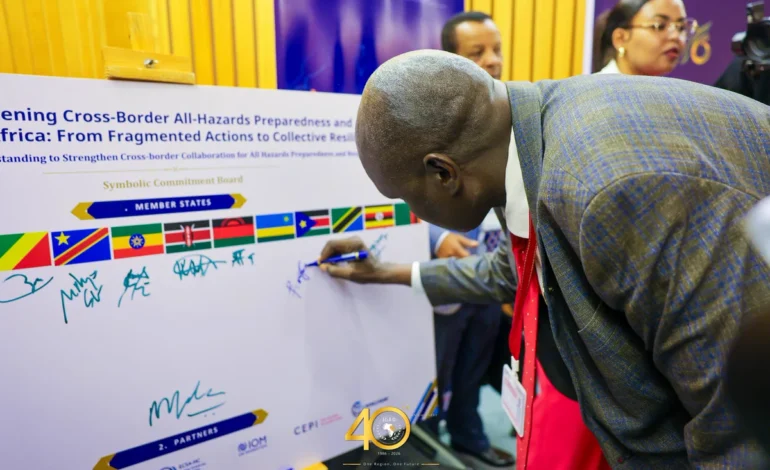

Thirteen African countries have agreed to strengthen cross border health security marking a major step toward improving disease outbreak preparedness in the continent.
The cooperation comes through a Memorandum of Understanding (MoU) on “Strengthening Cross-Border All-Hazards Preparedness and Response in Africa” signed in Addis Ababa, Ethiopia during the 76th session of the World Health Organization (WHO) Regional Committee for Africa (RC76).
The agreement marks an important milestone towards stronger cooperation across borders, enabling countries to better anticipate, prepare for and respond collectively to health emergencies and other threats that do not recognise national boundaries, said the Intergovernmental Authority on Development (IGAD).
For IGAD, stronger cross-border cooperation means stronger national systems, safer communities and a more resilient Africa.
Ethiopian Public Health Institute (EPHI) Director General Mesay Hailu highlighted Ethiopia’s efforts to align its health security framework with the 2024 amendments to the International Health Regulations (IHR), including a commitment to “reviewing and realigning local laws.”
Hailu welcomed references to the outcome documents of WHO and the Inter-Parliamentary Union as benchmarks for measuring progress in strengthening health security capacities at the subnational level.
Similarly, Kenya’s Principal Secretary for Public Health and Professional Standards, Mary Muthoni noted that Kenya views cross-border preparedness not as an optional diplomatic luxury but as a sacred public good and a fundamental sovereign duty.
“True health security is not measured by the walls we erect between us but by the strength of the shield we forge together,” she said.
The agreement focuses on exchanging critical health information and facilitating the sharing of medical supplies and other commodities among the participating countries.
“At the frontlines of this effort stand our border communities. They are never merely passive recipients of policy; they are our vigilant first observers, trusted messengers, and indispensable partners in defence,” Muthoni added.
Muthoni called on health leaders to institutionalise real-time data sharing through fully interoperable systems that alert every neighbour before crises spread.
She urged countries to build a unified health workforce capable of investigating, detecting, and responding jointly across borders with immediate surge capacity.
The African health ministers have been in discussion on a broader continental health agenda under – “A New Era of Health for Africa: United Action for Vision 2035,” which seeks to accelerate progress toward universal health coverage and strengthen health security across the continent.
The meeting brought together health leaders, regional institutions and development partners to advance coordinated, all-hazards preparedness and response across the continent.
Related Stories


Related Stories


Discover more from Matter Zone
Subscribe to get the latest posts sent to your email.