




IGAD convenes ministerial summit amid growing Red Sea tension
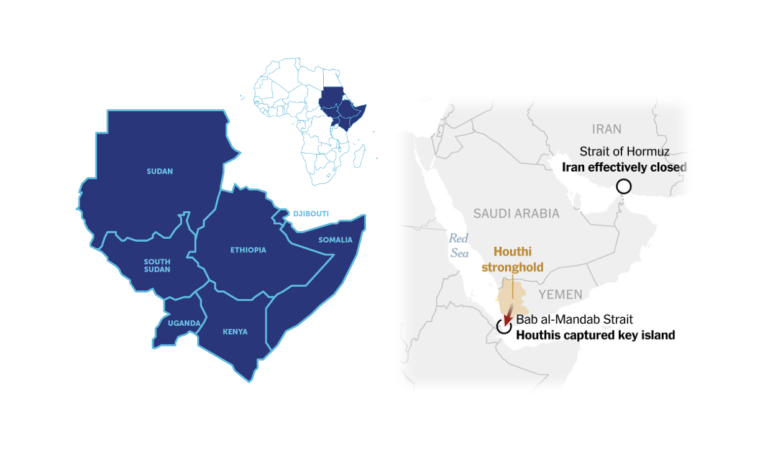

The Intergovernmental Authority on Development (IGAD) has convened its 74th Extraordinary Session of Council of Ministers in Djibouti on Tuesday.
The session brought together Ministers of Foreign Affairs and designated representatives of IGAD Member States to deliberate on key regional peace and security issues and other matters of importance to the region.
The session reviewed prevailing peace and security developments, assess ongoing regional efforts, and strengthen collective approaches towards peace, stability and cooperation across the IGAD region.
IGAD Executive Director Workineh Gebeyehu said the session came at a demanding time. “Wars far beyond our region now reach into our ports, our fuel pumps, our grain markets and our humanitarian budgets,” he said.
“Close to forty-nine million of our people are acutely food insecure, and more than nineteen million are displaced within their own countries,” he stressed.
Welcoming Sudan’s delegation in the session after the reopening of the bloc’s mission in Khartoum in July he noted that “Sudan remains the epicentre of one of the gravest emergencies in the world today.”
Gebeyehu indicated that “within sight of this hall, the southern gate of the Red Sea changed hands.”
His remark came in reference to the latest changes in Yemen’s 12-year conflict that the Iran-aligned Houthi militants advance to south along Yemen’s coast, which increased their ability to choke off the Bab el-Mandeb Strait at the mouth of the Red Sea.
As to the Executive Director, the bloc is not a story of despair alone that 77% of its priority areas were on track during the first half of this year.
“Our early warning system exceeded its half-year target for decision-support products and underpinned three Election Observation Missions,” he said.
Groundwater information system ran at 99.9% availability across more than 42,000 monitored wells, springs and dams, while regional universal health coverage index rose from 60 to 65 against a target of 70 for 2027, he highlighted adding that anticipatory action frameworks now operate in four of seven member states.
The session review political and security updates in Sudan, Somalia, and South Sudan, while assessing the evolving geopolitical situation in the Red Sea and Bab el-Mandab.
Facilitate political dialogue and collaborative mediation strategies for regional stability is also in its agenda along with reviewing the implementation and strengthening of the IGAD Treaty.
The session is also tasked to evaluate the current financial standing and long-term financial sustainability of the bloc, in tandem with boosting the operational effectiveness of the IGAD Secretariat to manage emerging regional challenges.
By Hasina Omondi
Related Stories


Related Stories


Discover more from Matter Zone
Subscribe to get the latest posts sent to your email.