




Sudan says Ethiopia’s grid cut among ongoing power crisis cause
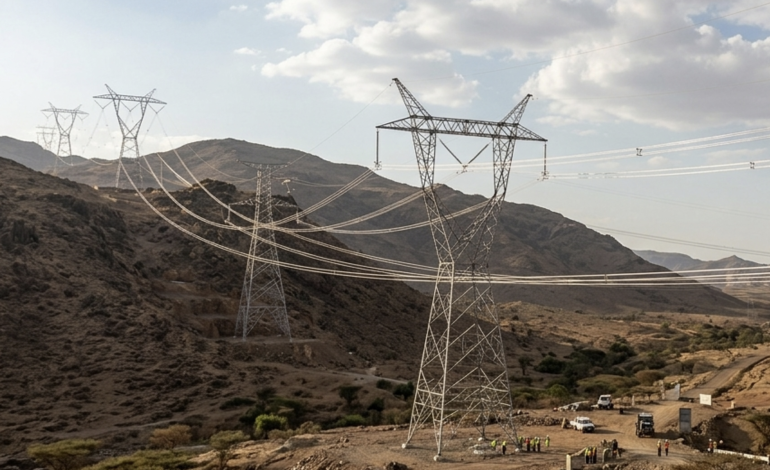

Sudan has blamed Ethiopia for halting electricity supplies causing the ongoing power interruptions across the country.
Sudan’s Ministry of Energy and Oil said on Tuesday that the current electricity crisis is driven by a combination of a series of technical and operational challenges coupled with the halt in imported power from Ethiopia.
The ministry said supply chain constraints involving operational inputs and spare parts, particularly fuel for thermal power plants further reduced available capacity as electricity demand driven by high summer temperatures have surged.
The power crisis has worsened significantly in the country’s capital Khartoum and several other states, exacerbating daily conditions for residents. Blackout durations vary across regions, often exceeding 18 hours per day.
The statement noted other factors including the return of residents to several areas, and rising consumption in the agricultural and industrial sectors.
The ministry noted that several major power generation plants were taken offline for required maintenance and technical work, reducing total output.
Supply chain constraints involving operational inputs and spare parts, particularly fuel for thermal power plants, alongside the halt in imported power from Ethiopia, further reduced available capacity.
The statement also highlighted extensive damage to generation units, transformer stations, and transmission lines caused by vandalism, theft, and systematic attacks, which directly impaired grid stability and operational capacity.
In response, the ministry affirmed that a comprehensive rehabilitation program is underway to restore the power sector and improve supply reliability.
Over 260 megawatts have already been restored to the national grid following maintenance, with available capacity expected to exceed 600 megawatts upon completion of ongoing projects.
Additionally, authorities have rehabilitated and restarted more than 20 substations that suffered damage across multiple states, including Khartoum state.
https://syndicatedsearch.goog/afs/ads?sjk=8kxXXd3GTa2itRE7AFsLKQ%3D%3D&psid=5134551505&channel=AutoRsVariant&cx=r-3ffd3eeaca24646ed&fexp=95396138%2C42533293%2C95373848%2C95396251%2C21404%2C17301437%2C17301438%2C17301442%2C17301266%2C72717107%2C17301575&client=pub-0291318216404608&r=m&hl=en&rpbu=http%3A%2F%2Fgoogle.com&rpqp=q&type=3&rs_tt=c&oe=UTF-8&ie=UTF-8&format=r5&nocache=6921784726652018&num=0&output=afd_ads&domain_name=sudantribune.com&v=3&bsl=10&pac=0&u_his=8&u_tz=180&dt=1784726652018&u_w=1512&u_h=982&biw=1512&bih=764&psw=1512&psh=764&frm=0&uio=-&cont=autors-container-0&drt=0&jsid=csa&oc=1&jsv=947067704&rurl=https%3A%2F%2Fsudantribune.com%2Farticle%2F316452&referer=https%3A%2F%2Fsudantribune.com%2F Teams have also repaired and re-commissioned over 1,700 km (1,050 miles) of damaged transmission lines despite severe security and logistical constraints.
Efforts are continuing to repair distribution stations and thousands of local transformers to progressively stabilize service levels.
The ministry emphasized that engineering crews are working continuously under complex operational and security conditions to bring remaining offline units back into service, optimize network efficiency, and minimize outage hours.
It added that load shedding is being managed in accordance with technical standards to ensure equitable distribution across regions, protect national grid stability, and prevent a total system collapse until full generation capacity is restored.
Source: Sudan Tribune
Related Stories


Related Stories


Discover more from Matter Zone
Subscribe to get the latest posts sent to your email.