




Ethiopia, Kenya ink new electricity supply deal
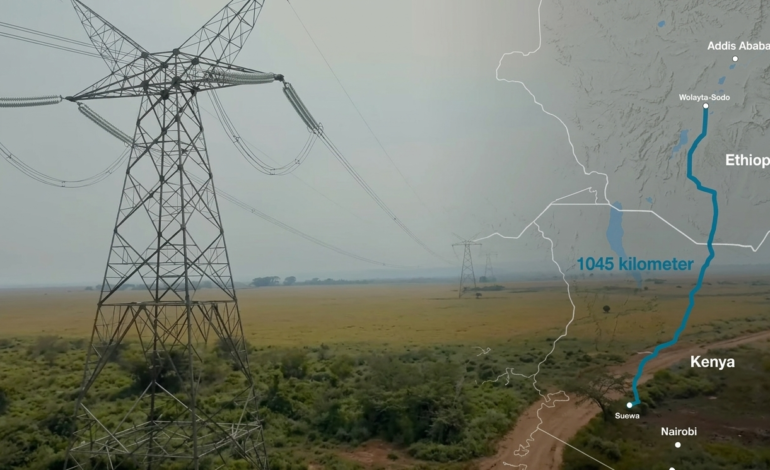

Ethiopia and Kenya have signed a new electricity supply agreement to grow reliable electricity trade, and benefit cross-border communities.
The deal sets Kenya to purchase electricity from Ethiopia at a rate of about $0.15 per kilowatt-hour, alongside a monthly demand charge of roughly $6.30 per kilowatt.
By advancing the broader geopolitical objective of an interconnected East African energy grid, the strategic partnership is designed to optimize bilateral electricity monetization.
The power purchase agreement (PPA) was signed by Ethiopian Electric Utility (EEU) CEO, Getu Geremew, and Kenya Power and Lighting Company (KPLC) Managing Director and CEO, Joseph Siror in Addis Ababa.
Geremew noted the agreement as a model for regional synergy, showcasing the possibilities of economic outcomes through alignment of East African countries’ utility frameworks along the long-standing vision of a “Connected East Africa”.
He framed infrastructure development not merely as a commodity exchange, but as a critical macroeconomic catalyst for sustainable regional growth.
Noting the agreement to serve as a foundational pillar for long-term peace and economic diplomacy between the two countries, Siror emphasized that the strategic value of the pact extends far beyond cross-border transmission infrastructure.
Siror confirmed that cross-border communities will gain direct access to stabilized grid electricity, strengthening economic and social ties between the two countries.
Under a 25-year power purchase agreement Kenya first began buying electricity from Ethiopia in 2022 through the Ethiopia-Kenya Transmission Interconnection Line that moves clean energy from Ethiopia directly into Kenya’s power grid.
The energy transmission line also known as “Electricity Highway” a 1,045 km long high-voltage power line working like a very large power cord.
Kenya considered buying electricity from Ethiopia as it appears economically feasible with cheaper cost than producing it locally, which helps Kenya to save about $10 million every year.
In the first phase, Kenya imported 200 megawatts (MW), an amount that has doubled by late 2025 marking a record 1,274.42 GWh, according to data from the country’s Energy Petroleum and Regulatory Authority (EPRA).
Nairobi is deepening reliant on Ethiopian power supply in comparison to other regional purchase it made over the period such as 225.64 GWh from Uganda and 33.79 GWh from Tanzania.
Related Stories


Related Stories


Discover more from Matter Zone
Subscribe to get the latest posts sent to your email.