




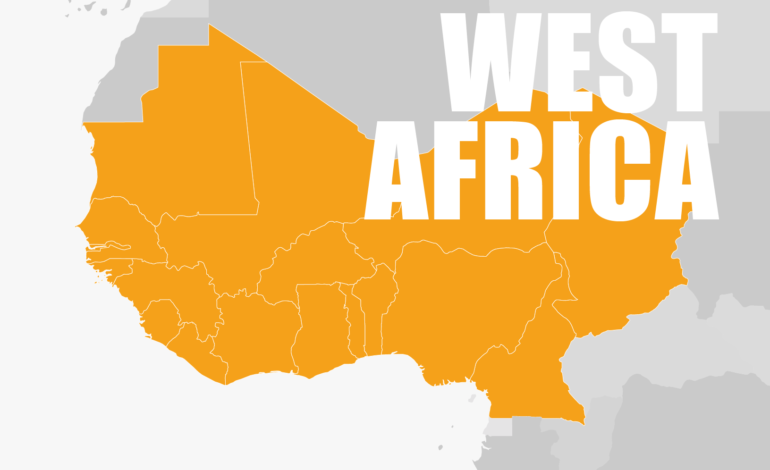

The headline of this Washington Post editorial, “Why West Africa is Worth Worrying About,” is essentially the only thing in the piece I agree with.
I’ve spent my career in think tanks and academia dealing with and trying to push back against the various forms of bad writing and thinking about West African polities, societies, and communities. Every researcher and scholar of West Africa (let alone Africa as a whole) has dealt with a heady combination of ignorance, inattention, and inaccuracy when it comes to the region, and the continent as a whole. This piece is a prime example of all of these issues, even while ostensibly trying to promote more attention to West Africa.
Where to even begin?
The piece frames the strikes as “righteous” echoing the president’s crusading language and attempt to portray conflict in Nigeria as largely one pitting Muslims against Christians, a dangerous mess that even the Nigerian government was quick to rebut. It also – like many articles since the Christmas Day strikes – uncritically adopts the administration’s claim to have targeted the Islamic State, even though a number of actual specialists in Nigeria and elsewhere such have pointed out that the militant picture in Nigeria is overwhelmingly complex, group affiliations are often fluid, and the strikes largely appear to have missed whatever they may have intended to hit.
IS-Sahel Province has indeed clashed with JNIM for years, but the uncritical portrayal of JNIM as attempting to seize Bamako and bring about “the first takeover of a country by an anti-Western Islamic terrorist group since the Taliban took Afghanistan” completely misses the relevant context, and reduces the enormous threat JNIM poses to a simplistic quip. And while IS and its global affiliates do indeed cause damage and havoc, lumping these groups together without any understanding of their interconnectedness as well as their distinct tactics, environments, and strategies risks creating more confusion than awareness, which in-turn can only lead to bad policy.
This is where we face the central issue. American programs have often been inattentive and ineffective in confronting militancy in the Sahel. The destruction of USAID contributed further to this not only by removing programming and important ties to regional governments, but also by stripping the US government further of local awareness, understanding, and research into a region that is already often a footnote in DC policymaking. But the answer to that problem is not blindly accepting basic narratives and instead looking for nuance, complexity, and sustained research that could actually help inform policy in and toward the region.
By Andrew Lebovich (PhD)
Related Stories


Related Stories


Discover more from Matter Zone
Subscribe to get the latest posts sent to your email.