




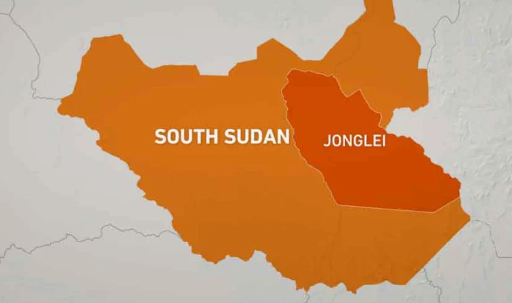

Renewed fighting in South Sudan has displaced tens of thousands of civilians and raised fears of a return to large-scale atrocities. This comes as opposition forces make rapid gains against government troops and allied militias.
The United Nations says about 180,000 people have fled their homes since last month in Jonglei state alone, citing government figures.
Opposition fighters have seized several towns in Jonglei State and are advancing towards its capital, while clashes continue in multiple other regions. Buoyed by their momentum, some opposition leaders have openly spoken of a possible march on the country’s capital, Juba.
The International Crisis Group has warned that the speed of the advance has fuelled suspicions of external backing, possibly from Sudan’s Armed Forces, amid strained regional rivalries.
The violence follows the collapse of a fragile power-sharing deal between President Salva Kiir and opposition leader Riek Machar.
Kiir suspended Machar as first vice president last year and put him on trial for murder and treason, accusations the opposition disputes. Critics argue the peace agreement had been steadily undermined long before its collapse.
On Sunday, the UN Commission on Human Rights in South Sudan warned that inflammatory rhetoric by senior military figures and fresh troop deployments marked a “dangerous escalation”.
The warning followed remarks by General Johnson Olony, who instructed troops in Jonglei to “spare no lives,” adding: “When we arrive there, don’t spare an elderly, don’t spare a chicken, don’t spare a house.”
“Language that calls for the killing of civilians, including the elderly, is profoundly dangerous,” said UN Commission chair Yasmin Sooka.
“In South Sudan’s past, such rhetoric has preceded mass atrocities.” Commissioner Barney Afako cautioned that mobilisation combined with “ethnicised messaging” risked triggering retaliatory violence.
The SPLM-IO accused the military leadership of sanctioning what it called “genocidal incitement”.
“Lt. Gen. Johnson Olony Thabo openly called for the destruction of Greater Upper Nile,” said Reath Muoch Tang, alleging the plan had the army chief’s approval.
“This crisis is not inevitable,” Sooka warned. “But the window to act is closing fast.”
Related Stories


Related Stories


Discover more from Matter Zone
Subscribe to get the latest posts sent to your email.