




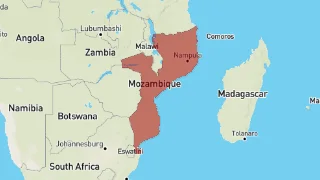

In the tangled geopolitics of the 21st century, the question of U.S. military intervention often arises reflexively in the face of violent conflict — yet in Mozambique’s case, such a scenario is neither inevitable nor straightforward. Mozambique’s northern province of Cabo Delgado has been embroiled in a brutal insurgency since 2017, where locally rooted armed groups with loose links to the self-styled Islamic State have waged a campaign of terror, displacing hundreds of thousands and threatening regional stability.
At first glance, Mozambique checks many of the boxes that historically have led to U.S. involvement abroad: an intensifying security crisis, an extremist threat framed within global terrorism narratives, and strategic economic interests tied to natural gas and critical minerals that could matter to U.S. energy supply chains. Indeed, American policymakers have already taken steps toward engagement — training Mozambican marines and commandos through Joint Combined Exchange Training programs, strengthening military-to-military ties, and providing developmental aid under strategies to prevent conflict and promote stability.
However, this is not the same as a full-blown U.S. intervention. So why does the question even get asked?
First, the insurgency’s persistence and evolution have underscored both local fragility and international concerns. Despite local, regional, and international efforts, violence continues unabated, killing civilians and displacing communities while threatening the very economic projects touted as Mozambique’s future. For some observers, this ongoing instability mirrors conditions that have previously preceded deeper foreign military engagement — from Somalia to the Sahel.
Second, the global “war on terror” framing still resonates within parts of U.S. policy circles. Mozambique’s insurgents are often described as linked to Islamic State, and counter-terrorism has become a language through which international partners justify deeper cooperation with Maputo. The risk here is that such framing emphasizes militarization over political solutions, potentially making Mozambique more of a security problem than a developmental one.
Third, geopolitical competition cannot be ignored. As Russia and other actors seek to increase their footprint — whether through humanitarian operations or private military companies — U.S. policymakers feel pressure to maintain influence in a region that, while peripheral, still matters for broader strategic balances.
Yet the dangers of unexamined intervention are real. There is evidence that militarization alone does not bring stability or address root causes like governance failures, deep poverty, and social exclusion. Heavy reliance on military solutions — especially when carried out by external actors — can exacerbate abuses and fuel local resentment.
Moreover, the United States already supports Mozambique in non-combat ways — from training to development aid and diplomatic engagement — without deploying combat troops. This suggests Washington’s current strategy favors capacity building and multilateral cooperation over boots-on-the-ground intervention.
In this light, the alarm over “U.S. intervention” may tell us more about international anxieties over instability than about actual U.S. intentions or interests. The real test will be whether global partners, including the United States, support Mozambique’s own lead in crafting a broad strategy that balances security, governance reform, and socio-economic development. Only then can the risk of further conflict recede — without repeating the mistakes of past foreign interventions.
Related Stories


Related Stories


Discover more from Matter Zone
Subscribe to get the latest posts sent to your email.