




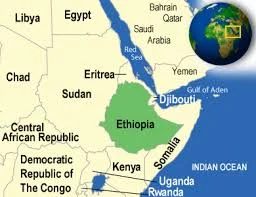

For Ethiopia, the most populous landlocked country in Africa, access to the sea isn’t merely a logistical issue. It’s a question of economic destiny and national dignity. Since Eritrea’s independence in 1993 cut Ethiopia off from its historic Red Sea ports at Massawa and Assab, Addis Ababa has had to navigate a complex web of diplomatic, economic, and geopolitical hurdles as it seeks to reclaim a foothold on the world’s oceans.
To outsiders, this might look like a mundane infrastructure problem: a landlocked country needing to pay port fees. But for Ethiopians, the loss of direct sea access cuts much deeper. It is widely seen as a historical dislocation, rooted in colonial and post-colonial conflict that severed Ethiopia from vital maritime gateways once used by the ancient Aksumite civilization and modern Ethiopian states alike.
Today, more than 95% of Ethiopia’s international trade flows through the port of Djibouti. While Djibouti has been a reliable partner, the economic cost is steep, both in hard fees and in vulnerability to congestion, delays, and political leverage. These logistics costs not only inflate the price of imports and exports but also constrain Ethiopia’s competitiveness in global markets.
It is thus easier to understand why Ethiopia’s leaders speak of sea access not as a luxury but as a socio-economic imperative. A sustainable maritime outlet would lower transport costs, spur investment, and enhance Ethiopia’s role in continental trade networks like the African Continental Free Trade Area.
But the pursuit of sea access also reveals the profound complexities of diplomacy in the Horn of Africa. Ethiopia’s recent memorandum of understanding with Somaliland, a self-declared but unrecognized state, to lease coastal land for port access and potentially a naval facility was celebrated domestically as a breakthrough. Yet the deal sparked a diplomatic rift with Somalia, which sees Somaliland as part of its territory, threatening peace cooperation and regional cohesion.
Critically, the Ethiopian government has stated that it does not seek military conflict with neighbors over access to the Red Sea. Prime Minister Abiy Ahmed publicly rejected the notion of war with Eritrea, the nation most geographically contiguous with Ethiopia’s historical coastline, and called instead for peaceful dialogue grounded in mutual benefit.
This emphasis on diplomacy is wise. History shows that disputes over ports and coastlines can escalate quickly when nationalism and historical grievances are inflamed. Any attempt to reclaim former territories by force would not only destabilize the Horn of Africa but also undermine Ethiopia’s fragile internal peace and regional partnerships.
Yet cooperation cannot be optional. Ethiopia’s best path forward lies in a regional framework of shared economic interests, where multiple coastal neighbors, from Djibouti and Somaliland to Kenya and Sudan, find routes that lower costs and expand trade corridors for all. Such a vision resembles historic land-swapping agreements elsewhere, where mutual gains enabled landlocked nations to secure viable maritime outlets without conflict.
In the end, Ethiopia’s quest for sea access is neither quixotic nor purely symbolic. It reflects a genuine struggle for economic resilience and strategic autonomy. But achieving it will require patient diplomacy, respect for regional sovereignty, and a willingness to forge new institutional arrangements that advance both Ethiopian interests and those of its neighbors. Only then can the dream of a sovereign maritime presence become a linchpin of stability and shared prosperity across the Horn of Africa.
By Matter Zone Contributor
Related Stories


Related Stories


Discover more from Matter Zone
Subscribe to get the latest posts sent to your email.