




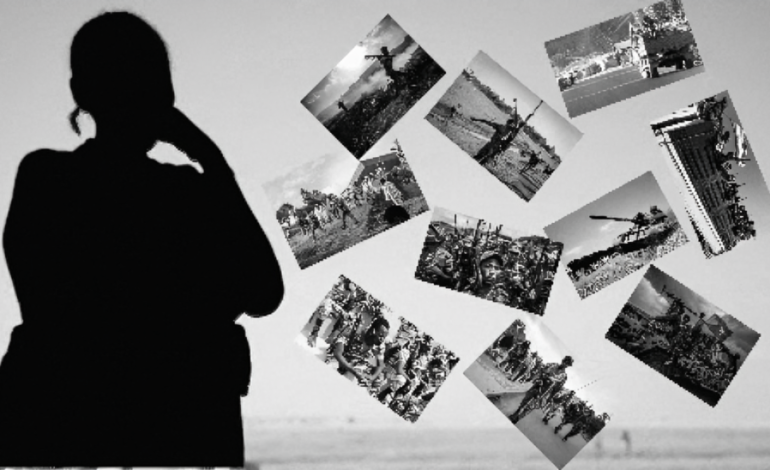

Conflict broke out in the northern Ethiopia by the year the African Union aimed to achieve a goal that aims to silence guns in the continent by ending all wars, civil conflicts, gender-based violence, violent conflicts and preventing genocide. When the guns fell silent, the losses did not. Across Tigray, Amhara, and Afar regions in Ethiopia, families paid for the war with their livelihoods, their trust, and their sense of safety.
The northern Ethiopia conflict is often told through ethno-political narratives, hate-speeches, maps, military movements, and ceasefire statements. But far from briefing rooms and battlefields, the war seeped quietly into the families whose livelihood were small, personal, and deeply tied to their communities.
Aside months’ long bravado and tension leading to the violent conflict, the war broke out in November 2020 between the federal government and the regional Tigray People’s Liberation Front (TPLF) led forces. The federal government’s quick advance into the regional capital of Mekelle saw little expectation that it will turn into one of the deadliest conflict East Africa has ever seen.
As the conflict took dramatic shift reports started coming out about the brutal involvement of forces from neighboring areas including Eritrean forces. Despite trading blames and denunciations to one another, all sides faced criticism for committing abuses including massacres, arbitrary detention, widespread sexual violence, and forced displacement of communities across the regions affected by the conflict.
Stalled hope
With a college diploma and a passion for business, Hadas, an entrepreneur, wife, and mother of two lived her whole life in Mekelle. For over a decade, she ran a local juice café, offering a variety of fresh juices. Over time, she noticed something: while Beles (prickly pear) was widely available in the area, however no one was bottling its juice commercially. That observation sparked her next big move. “There is ample Beles supply, but it was never value-added,” she says.

And so, she began small producing and bottling the juice in glass containers and selling it locally. Her product quickly gained traction, and before long, it was being sold as far as to the capital Addis Ababa. Encouraged by positive feedback, Hadas started dreaming even bigger: international markets. “I sent 4,000 bottles of juice to Europe and received great feedback,” she says proudly.
But growth didn’t come without hurdles. One of her biggest challenges was securing a steady supply of glass bottles. To address this, she took a bold step buying a share in the establishment of a local glass bottle factory, in a bid to ensure future access to packaging for her growing business.
Just as her business was poised for growth, the northern Ethiopia conflict hit Mekelle and the Tigray region hard. “The war devastated my livelihood and business,” Hadas remembers. She explains that the damage went beyond business interruption; it was a full-scale collapse of the value-chain. “The credits I had received, the glass bottle factory under establishment, my production space; all of it was either destroyed or looted,” she says.
Her dream of becoming a major Beles juice supplier, both to local and export market was put on indefinite hold. In total, she estimates her losses at around 2 million Birr (about 55,000 USD). She was left in despair, her years of hard work reduced to near rubble.
In Tigray, women entrepreneurs speak less about single incidents and more about prolonged absence. No inputs. No markets. No certainty. Even when the fighting eased, restarting felt impossible. The conflict disrupted daily life, severed supply chains, and brought economic activity to a halt.
Nestled within the rugged mountains of northern Ethiopia, Adigrat town is known in the 19th century as a bustling market for salt from the neighboring Afar region. The conflict engulfed the town, also located near the Eritrean border, and saw some of the most devastating violence of the war.
“The conflict started just when my business was gaining momentum,” says Helen, a small business owner in Adigrat. Like Hadas, Helen’s life and business were thrown into turmoil.
One of her biggest losses was a shipment of raw materials stuck in the Afar region, caught in the crossfire and never recovered. “I lost about 670,000 Birr (about 19,000 USD) worth of raw materials. It was heartbreaking. I had no way to claim it back,” she remembers with pain. The war not only took away her income, but it also shook her confidence, no matter how she refused to give up.
Marching to battlefield
As trade routes that once connected neighboring communities turned into lines of danger, the war pulled young people into its orbit with alarming speed. For many, especially in Tigray, the collapse of civilian life meant that adolescence and early adulthood were abruptly replaced by paramilitary fatigue, weapons, and fear.

Meresa was just 15 when the conflict reached his neighborhood in Mekelle. He was in Grade 8 when schools closed indefinitely, removing both structure and hope from his daily life. With classrooms shut and the city tense, he and several of his friends registered with a newly formed armed faction composed of regional paramilitary forces and former soldiers. It was known as the Tigray Defense Force or TDF in short.
“I was paid 300 Birr (about 8 USD) a month,” Meresa recalls quietly. “I stayed only three months before I ran away from the frontline.”
He says his decision was shaped less by ideology than by circumstance. Reports of abuse against young people, combined with intense messaging urging youth to defend their homeland, created an atmosphere where joining the fight felt almost inevitable. “There was no school, no work, and no safety,” he says. “Everything pushed us in one direction.”
Negus, a university graduate, represents another generation caught in the same current. He had just completed his studies at Mekelle University and secured what he describes as his dream job in the regional capital. “It was the moment my life was beginning,” he says. Within months, the war erased that future.
“I never imagined myself holding a gun,” he explains. “No matter how bad the situation was, I believed I would stay out of it.” That resolve weakened as violence crept closer. Negus speaks of harassment and abuse, particularly by Eritrean forces operating in parts of the region, and of the growing sense that survival itself had become uncertain.
At one point, he attempted to reach his family, who were living in an area under Eritrean forces control. With roads blocked and checkpoints everywhere, he walked for tens of kilometers to avoid detection. On one such journey, he was captured.
“They beat me so badly that I thought I would die,” he says. He survived, but the experience hardened him. “That was when I decided it was better to die on a battlefield for something I believed in than to be killed randomly, at any time.”
Before leaving, Negus wrote a message in a Telegram group shared with friends he had studied with, now scattered across Ethiopia. “I told them I was marching toward Amhara and Afar regions,” he recalls with smile on his face. “I said we might meet each other on the battlefield.”
In Adigrat, further north, Tsegaye experienced the war not as a fighter but as a civilian trying to endure its daily cruelty. He had been working for a local company when fighting intensified. At one point, he and his family were forced into hiding for days, afraid even to step outside to fetch water. “There were moments when we could not drink,” he says. “We were afraid to move.”
One day, desperation pushed him out of hiding in search of food. He did not get far. “They caught me as soon as I stepped outside,” he recalls. “I told them I was just a regular man trying to eat.” His words did not protect him. He was beaten severely, suffering a broken shoulder that still troubles him.
“That war taught me how fragile life is,” Tsegaye says. “It showed me how important small things are, like water, or simply walking outside your home.”

These stories sit alongside those of women rebuilding shops, stalls, and workshops, forming part of the same fractured landscape. The war did not only destroy infrastructure or businesses. It rewired choices, pushing teenagers into battle, graduates into trenches, and civilians into hiding. Across northern Ethiopia, the social fabric was stretched thin, leaving scars that remain long after the fighting subsided.
One year after the conflict erupted, in November 2021, Tigrayan forces re-grouped and launched offensive into the neighboring Amhara and Afar regions against the federal forces and allies. Then the call came for people from all walks of life to rally against the advancing TDF and salvage Ethiopia.
Undone stitches
In Finote Selam, a town in Amhara region, the war reached close enough to be felt, if not seen. The rhythm of Sinidu’s sewing machine at the downtown once marked a quiet kind of progress. Orphaned young, she had learned early that survival required initiative. Tailoring became her language of independence.
Her civil servant husband was deployed to frontline in Gashena, a mountainous Amhara town some 150km east of Lake Tana, to defend the advancing Tigrayan fighters. His salary stopped. As fierce battle fought in Gashena rumors replaced news. With children to feed, Sinidu run out of her savings, dismantling years of careful planning.
“I learned the weight of motherhood then,” she says, not as a metaphor, but as a measure of fear. The war did not destroy her shop directly, but it hollowed out the foundations beneath it. Customers disappeared as ill deeds of the advancing TDF forces rumored. Anxiety replaced ambition. Like many women in Amhara towns, she lived in suspension, waiting for husband to return and for normal life to resume. Normal did not come back unchanged. There was no news of her husband for months.
A market town stripped bare
Woldia was once a place of movement. Goods passed through. Traders stopped, talked, negotiated. Kidist’s drink wholesale business thrived on that energy. She had risked everything, including her house, to secure a bank loan and expand her venture.
With arrival of Tigrayn forces fighting entered the town, commerce collapsed in hours. A freshly delivered truckload of drinks was looted. Cash vanished. Equipment was destroyed. She was left with debt, trauma, and the unrelenting demand for loan repayments. “There was no leniency,” she says. “War or no war.”
Her experience was common. Across Amhara, business women lost stock that could not be insured, premises that could not be defended, and capital that could not be replaced. The war did not only interrupt trade. It reversed it, turning growth into liability. “With another round of conflict happening I am trying to keep peace of mind and hope for better tomorrow,” she says.
A mannequin in Dessie
Dessie, long a bridge between Tigray, Amhara and Afar regions, became a prize for Tigrayan forces. When control of the town changed hands, fear spread faster than facts. Hayat ran without locking her clothing shop. She survived. Her business did not.
When she returned days later, everything was gone except a mannequin. It stood upright among the debris, a silent witness to the speed with which order collapsed. 800,000 Birr (about 22,000 USD) in clothing vanished overnight.
For nearly a year, Hayat did nothing. Trauma is not inactivity by choice; it is paralysis imposed by shock. When she began again, it was with coffee and tea, not fashion. Smaller margins. Lower risk. Less exposure. Many women made similar choices. The war reshaped ambition, pushing it toward survival rather than growth.
Afar’s quiet losses
In Semera, the capital of Afar region, Fatuma served coffee under a tree. It was humble, but it worked. Her stall supported her family and sent her brothers to university. Then the conflict displaced her relatives into her home. A road accident injured her leg. Savings disappeared. For months, she could not work.
In Logia, a town in Afar region, a college student Hawa watched schools close, roads block, and the internet go dark. As a Gen-Z she was good at exploiting the internet for business but her online trade died silently, without looting or fire. The war erased opportunity by cutting connection.
Her father who worked for government office was injured in an artillery strike. Recovery took months. Income stopped. Education paused. For young women in Afar, the war narrowed already limited paths even further.
Living with the aftershock
Women owned small businesses in conflict affected areas of northern Ethiopia were more than income sources. They were social contracts. Credit was extended on reputation. Goods moved on familiarity. Customers became neighbors. But war fractured this fabric.
In Amhara, suspicion followed movement. In Tigray, isolation replaced exchange. In Afar, insecurity discouraged travel. Women spoke of fear, not only of violence, but of betrayal. Who looted. Who informed. Who benefited. Trust, once broken, does not recover quickly.

None of these women employed hundreds. Yet collectively, they formed an invisible economy that fed families, trained youth, and anchored neighborhoods. The war dismantled such networks quietly. The loss was cumulative. One closed shop meant fewer apprentices. One looted store meant unpaid rent. One blocked road meant spoiled goods. The impact rippled outward, touching households far removed from the front lines.
Even as guns fell silent, insecurity lingered. Women spoke of fear reopening shops. Fear of debt collectors. Fear of moving goods across regions that once felt familiar. In Tigray, years of isolation reshaped expectations. In Amhara, repeated displacements eroded confidence. In Afar, the memory of sudden disruption remained sharp. Social cohesion suffered. Communities that once traded freely now hesitated. Business women became cautious, conservative, risk-averse. The war trained them to expect loss.
Yet none of these stories end with abandonment. In their desperate attempt to survive these women made a choice to begin again. Their effort to recovery was not dramatic; it is rather practical seen through small steps, limited trust, and controlled risk. What changed were not only their businesses, but their understanding of security. Resilience now required contingency, while expansion demanded caution.
Beyond statistics
The northern Ethiopia conflict will be measured in figures: deaths, displacement, destroyed infrastructure. But these women’s stories reveal another ledger. They record the cost of interrupted dreams, of savings liquidated under pressure, of ambition scaled down to survival. They show how war enters daily life, not with explosions, but with silence where commerce once existed.
Across Tigray, Amhara, and Afar, women carried the weight of recovery on shoulders already burdened by care, loss, and responsibility. They rebuilt not because conditions were ideal, but because stopping was not an option. These women were not combatants. Yet their lives became collateral damage, while there are lots of untold stories of violence. Collateral damage is often invisible. In northern Ethiopia, it has names, faces, and businesses that still stand, altered but alive.
UN Deputy Secretary-General Amina Mohammed visited those regions in February 2022, and said “it was heartbreaking to see how the social fabric has torn in northern Ethiopia.”
“Ethiopian women, writ large, were affected in a way that is unimaginable,” she said. “In your worst nightmares you cannot imagine what has happened to the women in Ethiopia.” She said it would be a lifelong healing process for many Ethiopian women, especially as so many have been rejected by their communities because of the violations they have endured.
Negus has been dismissed from TDF and he lives a humble life in Mekelle. After months of silence Sinidu’s husband has returned to his regular job in Finote Selam. These men are both heroes in their own stories. As the UN Official said “men go to war and come home heroes, it doesn’t matter their injuries… women have been unimaginably injured. They are not heroes, they are outcasts. That has to stop.”
This is a special report by Kiram Tadesse. He spoke with individuals across the Tigray, Amhara, and Afar regions who have been affected by the conflict in northern Ethiopia. To protect their safety and privacy, the names of those interviewed have been changed.
Related Stories


Related Stories


Discover more from Matter Zone
Subscribe to get the latest posts sent to your email.