




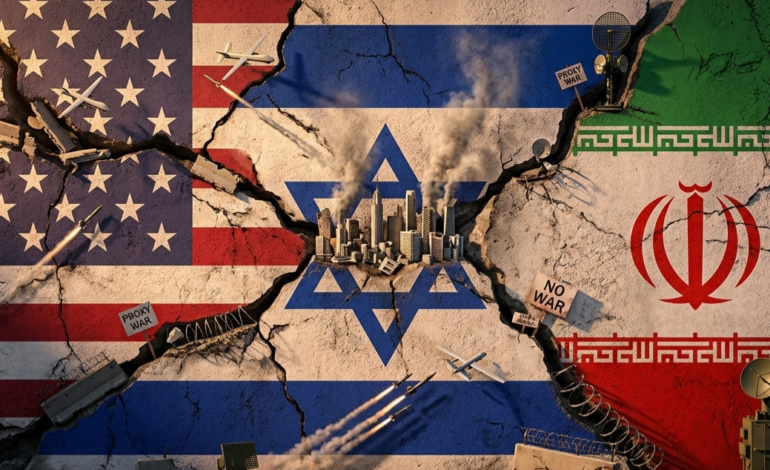

African countries are reacting to the ongoing United States (U.S.) and Israel war against Iran, as leaders show mixed position and call for restraint and a peaceful resolution.
Somalia condemned Iran’s retaliation expressing solidarity with Saudi Arabia, Qatar, Kuwait, Jordan, Bahrain and Oman, while leaving the United Arab Emirates (UAE) out.
Mogadishu’s ignorance to Abu Dhabi is attributed to Israel’s recognition pf Somaliland as an independent state, a move it believes the UAE quietly supported. Its breakaway state – Somaliland also criticised Iran’s retaliation and not the U.S. or Israel’s initial action.
Ethiopia’s Prime Minister Abiy Ahmed went further, holding a direct call with Kuwait’s Crown Prince Sheikh Sabah Khaled Al-Hamad Al-Sabah.
Abiy condemned what he described as an “atrocious attack” on Kuwait’s sovereignty and airspace, pledging solidarity with its leadership and people.
Egypt’s Foreign Ministry went on condemning Iran’s attacks on “brotherly Arab nations,” while its president Abdel Fattah el-Sisi made calls to Gulf leaders to express his solidarity.
Kenya’s President William Ruto expressed strong condemnation of “the strikes on Gulf states.” He warned the regionalisation of the conflict threatens international peace and security.
South Africa’s President Cyril Ramaphosa also expressed deep concern about the escalation and emphasised that Article 51 of the UN Charter permits self-defence only when a state has suffered an armed attack.
In what seems criticism to U.S.-Israel, Pretoria said “anticipatory self-defence is not permitted under international law.”
Senegal’s Prime Minister Ousmane Sonko stressed the erosion of the rules that underpin global order, describing the U.S.-Israeli strike on Iran as “extremely serious” where he said “the whole balance of the world that has been built over the last 50 years is compromised.”
Similarly, Nigerian Foreign Ministry called for “maximum restraint” and strict adherence to international law, without condemning either Iran or the U.S.-Israel coalition.
Ghana used the same tone urging de-escalation and focusing on the safety of its nationals abroad, while the Gambia echoed caution, calling for “maximum restraint” and stressing for the protection of civilian lives and infrastructure.
The U.S. and Israel joined forced and launched an all-out strike on Iran on February 28, 2026.
Iran responded with launching missiles and armed drones against Israel and U.S. military facilities in all six Gulf Cooperation Council countries.
In Israel, Iranian missiles caused serious damage, killing and injuring scores of people. As of Tuesday, six U.S. service members have been killed and 18 injured. Three U.S. fighter jets have crashed in Kuwait, which the U.S. military claimed the jets were “mistakenly” shot down.
Related Stories


Related Stories


Discover more from Matter Zone
Subscribe to get the latest posts sent to your email.