




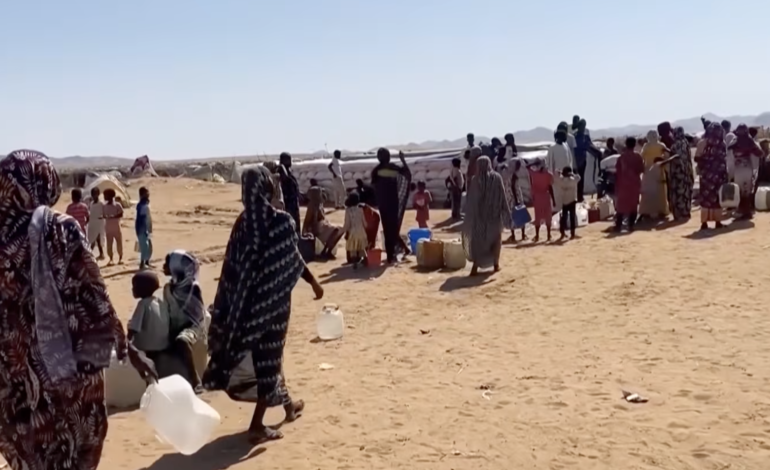

The United Nations World Food Program (WFP) has said Sudan is facing “the world’s largest hunger and displacement crisis.”
WFP Acting Executive Director, Carl Skau, spoke about the crisis after an eight-day visit to the country saying that 20 million people are suffering acute hunger and 14 million displaced.
Around 5 million people are experiencing emergency levels of hunger (IPC4), while about 200,000 people are facing famine-level conditions, said Skau who visited Khartoum, Darfur and Kordofan.
He said he witnessed the impact of conflict, hunger, displacement, drought and severe funding shortages on communities.
Highlighting the attacks that targeted UN humanitarians, Skau however said Sudan does not get by far the attention it deserves and expressed the possibility to work in the country.
“WFP reaches between 4 and 5 million people every month. 2 million or 2.5 million of those are in the hardest to reach areas, so it is possible to make a difference,” he said.
In El Fasher, Skau described widespread destruction after 18 months of siege, saying homes had been damaged, vehicles burned and economic activity had largely collapsed. The WFP is providing life-saving food assistance to around 20,000 people in the city.
He also highlighted the situation in Tawila, which has received around 250,000 newly displaced people, bringing its population close to one million. While shelter and food assistance have improved, families are receiving only half rations, enough for about two weeks.
Skau said drought is adding to the humanitarian challenges, particularly in Darfur, where he described conditions as the worst since 1984, warning of its impact on agriculture and livestock.
Despite the challenges, the WFP continues to provide assistance to four to five million people each month, including up to 2.5 million people in hard-to-reach areas.
However, Skau warned that severe funding shortages could force the agency to significantly reduce its operations within weeks. He called on donors to provide additional resources and urged greater political efforts to end the conflict.
“We cannot continue to let these people down,” Skau said, stressing the need to provide civilians with basic necessities while pursuing a political solution.
Related Stories


Related Stories


Discover more from Matter Zone
Subscribe to get the latest posts sent to your email.