




Ethiopia ties its dev’t ambition with Blue Nile, Red Sea
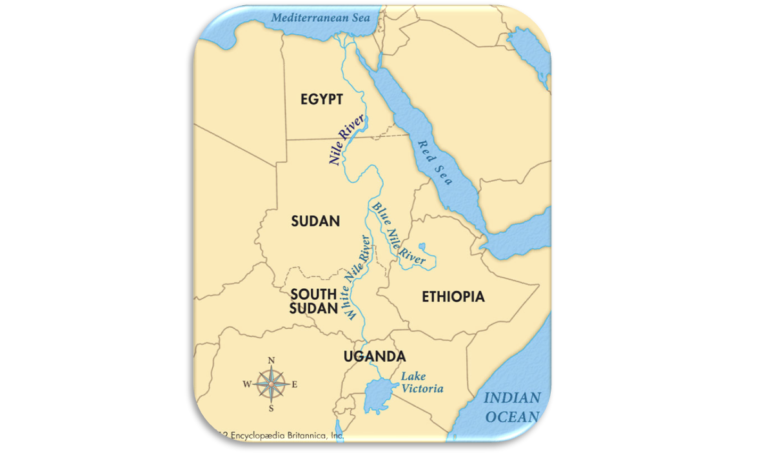

Ethiopia has said its strategic development ambition is tied to the Blue Nile River and the Red Sea.
This is according to its Minister of Water and Energy Habtamu Itefa, who said the two water bodies serve as strategic pillars for the country’s national development and regional connectivity.
He was quoted by government news agency ENA as saying that the two waters have shaped Ethiopia’s history, influenced regional power dynamics, and continue to define the country’s economic and strategic trajectory.
The minister said that “the issue of these two waters should not be viewed simply in terms of whether water exists or not; however, it must be understood in a much broader historical, economic, and geopolitical context.”
The statement came amid growing tensions involving regional countries and their proxy role in transboundary affairs.
The dispute mainly stemmed between Ethiopia and Egypt over the Grand Ethiopian Renaissance Dam (GERD) built on Blue Nile expanded into a broader strategic struggle for Red Sea access and regional alliances.
Egypt has forged counter-encirclement partnerships including a maritime transport pact with Eritrea, while landlocked Ethiopia accuses of Cairo aiding rebels fighting the Addis Ababa government insisting that no one cannot block its sovereign search for sea access.
Ethiopia is a major contributor to the Blue Nile, with about 86% of the water flow originating from its highlands.
The minister noted the close linkage of both the Blue Nile and the Red Sea to the wellbeing and future development of Ethiopia’s more than 130 million peopl. The two water bodies are strategic assets with implications that extend beyond Ethiopia’s borders, according to him.
This came as Ethiopia is reported to plan in building more dams on the Blue Nile River.
Referring to historical constraints that limited the country’s development aspirations Itefa, said “Ethiopians have paid a heavy price because of these two waters.” For decades, he said, the country was prevented from fully developing and utilizing the Abay River amid external political pressures.
Ethiopia sees the GERD as a transformative national project that has fundamentally changed the country’s position by enabling it to realize a long-held national aspiration while strengthening energy security and regional economic integration.
ENA reported that the GERD is currently generating around 5.15 GW of electricity, allowing Ethiopia to meet growing domestic demand and expand electricity exports to neighboring countries.
Itefa indicated that Addis Ababa’s approach to Red Sea is based on diplomacy, peaceful engagement, and the principle of mutual benefit, which he said should not be viewed as a short-term political agenda but as a strategic national objective that spans generations.
According to the minister, access to the Red Sea issue is a long-term, intergenerational undertaking that can contribute to regional stability, maritime security, and reduced geopolitical competition in one of the world’s most strategically significant waterways.
The East and the Horn of Africa region is at its peak shaped by the Red Sea discourse, severe internal and regional conflicts, and intense competition among regional, global and Gulf powers.
Related Stories


Related Stories


Discover more from Matter Zone
Subscribe to get the latest posts sent to your email.