




Africa leads China’s BRI engagement as Ethiopia tops in energy venture: Report
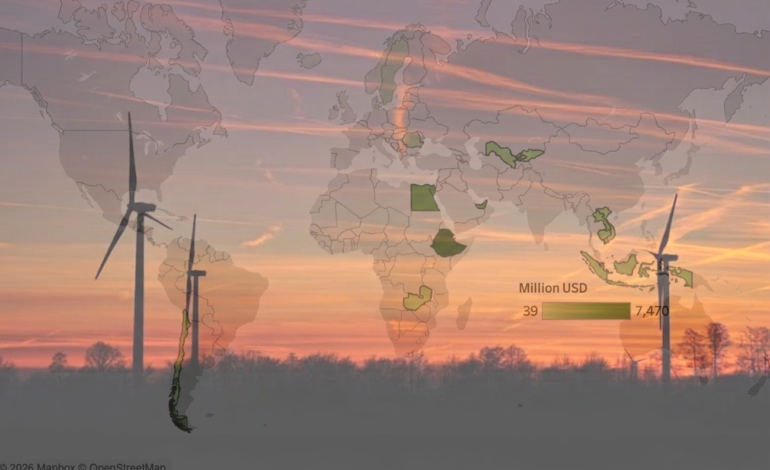

Africa has firmly positioned itself at the forefront of China’s Belt and Road Initiative (BRI) in the first-half of 2026.
Chinese investment in the region has nearly tripled compared to the same period last year, reaching a record $33.5 billion in investment announcements, according to a new report compiled by Christoph Nedopil Wang of the Green Finance and Development Center.
This surge makes Africa the top regional recipient and marks the strongest first-half performance for Chinese BRI investment on the continent.
The findings say Ethiopia emerged as the continent’s largest recipient of Chinese energy engagement, propelled by a monumental $14.8 billion green energy development agreement.
This highlights a significant shift toward sustainable infrastructure in the region major expansion including a green energy agreement between the Ethiopian Investment Commission and Mingyang Smart Energy Group was initially announced at $10 billion.
In May 2026, it was expanded and licensed to $14.17 billion, explicitly including the development of green ammonia production facilities. Marking one of the largest private Foreign Direct Investment (FDI) in Ethiopia’s history, the first phase of this massive project allocates $7.47 billion strictly to physical generation assets.
The findings of the report also developed with the University of Queensland (UQ) Business School with a focus on Asia Pacific Industry Transitions detailed broader trends across Africa and beyond. While Ethiopia led in renewables, other African countries saw massive capital influxes, particularly in processing.
Global BRI metals and mining engagement hit a record $21.8 billion, the report puts that during the first-half of 2026, Egypt leading the category through a $10 billion steel mill.
The report also underscores shifting dynamics in Chinese overseas investments in terms of private sector growth, global milestones as well as green energy dominance.
The report indicated that private Chinese companies have dramatically increased their footprint, accounting for 47.7% of total BRI engagement in first-half of 2026, climbing from just 12.5% in 2020.
Overall global BRI engagement hit a first-half record of $126.4 billion across approximately 186 deals, making it the most active first six months since the initiative began in 2013.
Globally, more than half of China’s $36.3 billion energy-related engagement was classified as green. This confirmed over 20 GW of new green electricity projects, exceeding the total for all of 2025.
Transportation-related engagement rose for the first time since 2020, reaching $18.2 billion globally through construction contracts, Nedopil’s outlook notes adding that that ongoing global trade frictions and fossil fuel volatility could further accelerate this pivot toward green energy and localized manufacturing.
Related Stories


Related Stories


Discover more from Matter Zone
Subscribe to get the latest posts sent to your email.