





Somalia’s President Hassan Sheikh Mohamud has said the mandate of the federal government will officially expire on May 15 next year under the newly amended constitution.
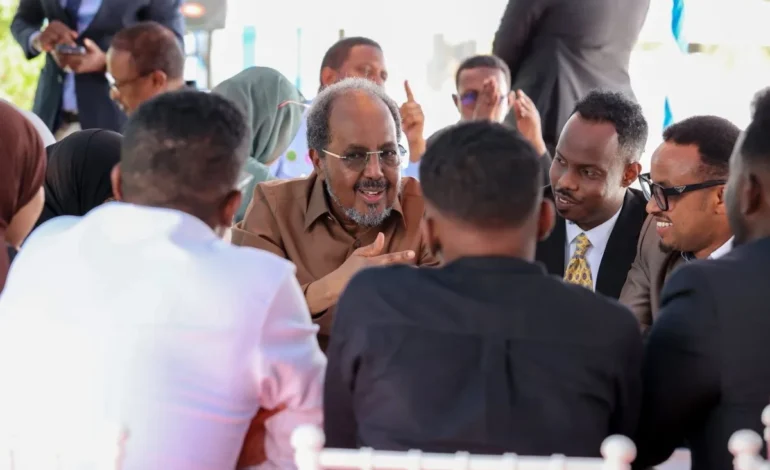
Speaking at a youth day celebration on Friday in Mogadishu, Mohamud said his administration would continue operating under the revised constitutional framework that sets the term of the federal government and parliament at five years.
This came as talks between the federal government and opposition leaders have ended without agreement, chartering growing tensions over the country’s electoral process and constitutional future.
The three days long talks brought together the president and members of the Somali Future Council, an opposition coalition led by former president Sheikh Sharif Sheikh Ahmed and Puntland leader Said Abdullahi Deni.
The final session of the talks held inside Halane compound, a heavily fortified diplomatic and military enclave in the capital, “was brief and concluded without any formal agreement or joint statement from the parties,” Horseed reported citing officials familiar with the discussions.
The president however claimed in his speech that the recent constitutional amendment came as part of the promises his administration made to the public, including establishing political parties and moving away from Somalia’s longstanding indirect electoral model.
He defended the latest move intended to make the constitution complete and plans for one-person, one-vote elections.
He said Somalia had made progress in rebuilding state institutions, improving international relations and emerging from diplomatic isolation, citing the country’s membership on the United Nations Security Council and reforms at the central bank as examples.
Mohamud criticised the opposition of intending to preserve the clan-based 4.5 power-sharing system and indirect voting model.
Introduced in 2000, the 4.5 power-sharing system had been implemented to distribute government seats among Somalia’s major clan families, according to Rift valley Institute.
The system allocates equal political representation to the four major clan families – Hawiye, Darod, Dir, and Digil-Mirifle – and a half-share or 0.5 to a coalition of minority clans.
The old electoral practice had contributed to instability and violence in the country, the president said.
The country’s Ministry of Information said in a statement that the federal government remained committed to implementing the direct election framework, following the talks that ended without breakthrough as election dispute deepens.
By Hasina Omondi, Matter Zone Staff Writer
Related Stories


Related Stories


Discover more from Matter Zone
Subscribe to get the latest posts sent to your email.