




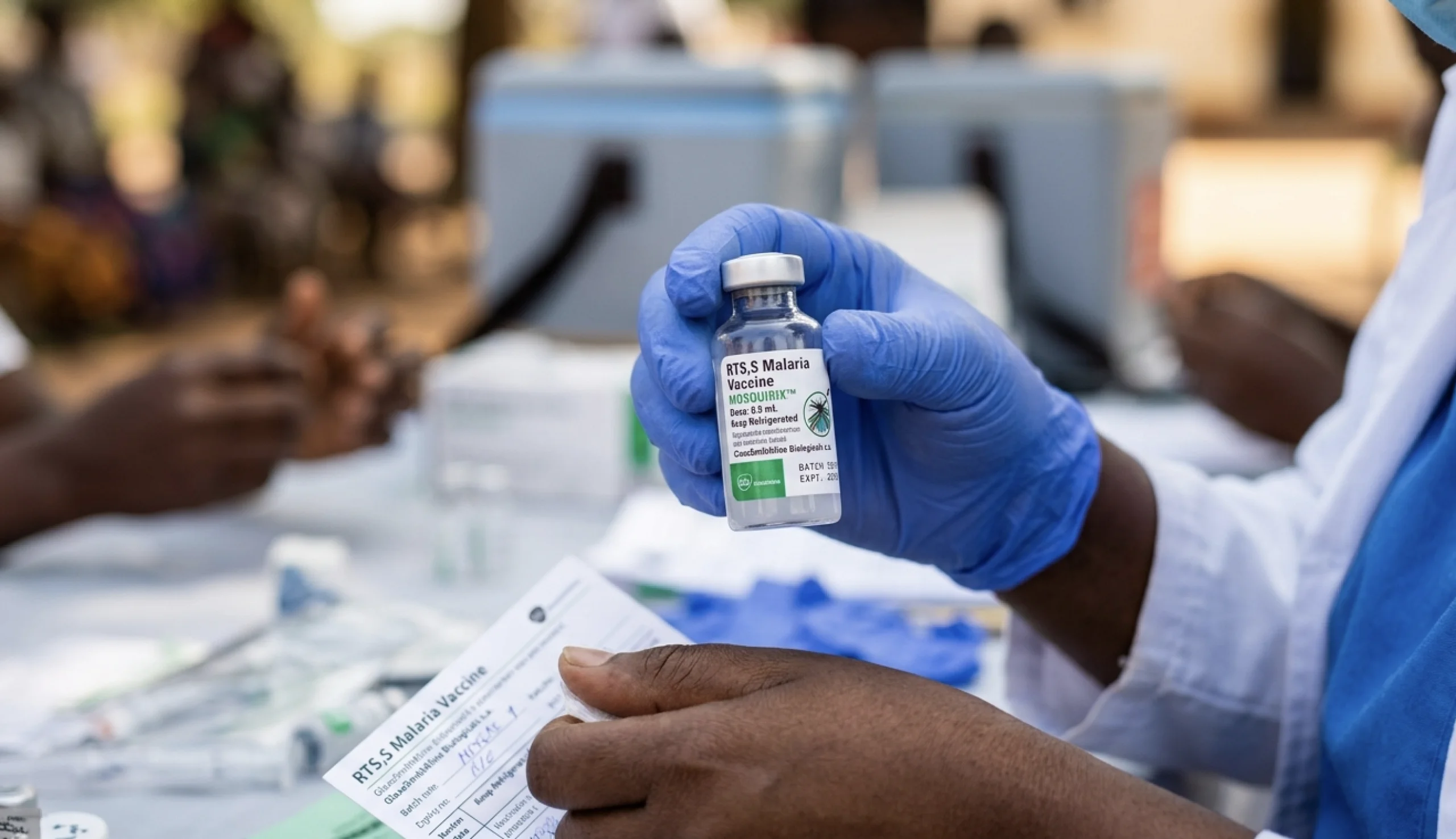

A new study has found the RTS,S (Mosquirix) vaccine prevented thousands of deaths in Africa averting approximately 1 in 8 deaths in young children.
The large-scale study published in The Lancet found that over the period of four years the vaccine is dramatically reducing child deaths in Ghana, Kenya and Malawi.
This reduction was observed even though vaccine coverage was incomplete, said the researchers that around 70% of eligible children received the first three doses of the RTS,S vaccine, while only around 40% received the fourth dose.
The World Health Organization (WHO) led study was carried out by international research team with partners in the three countries, where the vaccine was first introduced through routine childhood immunization programmes in the world as well as the London School of Hygiene and Tropical Medicine (LSHTM).
The evaluation examined outcomes from the Malaria Vaccine Implementation Programme (MVIP), a pioneering initiative launched between 2019 and 2023 to assess the real-world impact, safety, and feasibility of introducing the RTS,S vaccine into national health systems.
Researchers and WHO officials say the results provide compelling evidence that malaria vaccines can significantly reduce mortality when integrated into broader malaria prevention and treatment strategies.
The finding set evidence that the vaccination could transform child survival rates across regions hardest hit by malaria.
“This is very solid evidence of the potential for malaria vaccines to change the trajectory of child mortality in Africa,” said Dr Kate O’Brien, Director of the WHO Department of Immunization, Vaccines and Biologicals and co-author of the evaluation.
Despite decades of global malaria control efforts, the disease continues to devastate communities across Africa, reports Devdiscourse.
The RTS,S vaccine is the first malaria vaccine ever recommended by WHO for widespread use, following decades of scientific research and development.
Malaria is one of the leading causes of child mortality in Africa where WHO estimation shows that approximately 438,000 children died from malaria in 2024 alone.
Health experts believe widespread deployment of WHO-recommended malaria vaccines — including RTS,S and the newer R21 vaccine — could save tens of thousands of young lives every year.
WHO officials stress that vaccination is most effective when combined with existing malaria control tools such as insecticide-treated mosquito nets (ITNs), indoor residual spraying, rapid diagnostic testing, and access to effective antimalarial treatment.
“Malaria vaccination strengthens the response and increases access to malaria prevention in countries that use a mix of proven interventions to optimize impact substantially in moderate and high transmission areas,” said Dr Daniel Ngamije Madandi, WHO Director of the Department of Malaria and Neglected Tropical Diseases.
One of the study’s most important findings was that the malaria vaccine rollout did not negatively affect uptake of other childhood vaccines or reduce use of other malaria prevention measures.
Instead, researchers found the four-dose vaccine schedule created additional opportunities for children to receive other critical health interventions during clinic visits.
According to the authors, the extra healthcare contacts required for malaria vaccination allowed health systems to simultaneously deliver services such as measles vaccines, meningitis vaccines, vitamin A supplementation, and insecticide-treated bed nets.
The study also found that many children who were previously not protected by mosquito nets still received malaria vaccination, effectively increasing overall protection coverage among vulnerable populations.
Public health specialists say this integrated approach could strengthen routine immunization systems while expanding healthcare access for underserved communities.
Today, 25 malaria-endemic African countries have introduced malaria vaccines into their childhood immunization programmes and national malaria control plans. More than 10 million children annually are currently targeted for vaccination across these countries.
According to the researchers, the impact observed in the three countries could be replicated — or even surpassed — in many of the newly participating countries, particularly in areas with similarly high or higher malaria transmission rates.
However, despite sufficient global vaccine supply, WHO officials warn that many countries remain unable to scale up vaccination coverage because of limited financing.
Related Stories


Related Stories


Discover more from Matter Zone
Subscribe to get the latest posts sent to your email.