




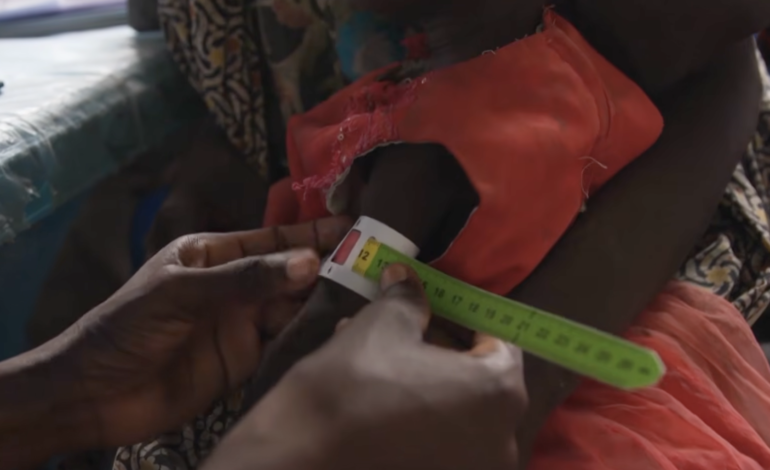

A new report by the Integrated Food Security Phase Classification (IPC) has said over half of South Sudan’s population faces acute hunger crisis.
The report has found that 73,000 people in the country are at risk of famine, while 7.8 million are facing crisis levels of food insecurity and 2.2 million children are suffering from acute malnutrition.
Conflict and displacement are intensifying South Sudan’s hunger crisis, according to a joint statement on Tuesday – 28 April 2026 – from United Nations (UN) agencies.
IPC, a UN and government backed initiative that monitors the severity of food crises worldwide, represents an alarming deterioration in the food supply in the country.
It says South Sudan is rapidly becoming one of the world’s most severe hunger crises, where the UN agencies warn of a credible risk of famine in four counties across Upper Nile and Jonglei states.
“Since the beginning of the year, we have seen a significant increase in conflict in Jonglei and Upper Nile and repeated blockages in our attempts to access people in these areas,” said Ross Smith, WFP’s Director of Emergencies and Preparedness.
“We are now engaged in a critical race against time to expedite and increase our deliveries to remote locations in anticipation of an early rainy season” he added.
For children, the nutritional situation has continued to worsen. The number aged six months to five years facing acute malnutrition has increased by 100,000 cases when compared to six months.
Through July this year, 700,000 children are projected to face severe acute malnutrition, the deadliest form. Similarly, 1.2 million pregnant and breastfeeding women are acutely malnourished, placing both mothers and infants at heightened risk.
“Conflict is hitting women and children the hardest. These children are the future of the country, but without urgent support, that future is at risk,” Smith said.
The UN is calling on the international community and governments to act immediately, with critical funds needed to prevent further deterioration and support food assistance, nutrition programmes, clean water and sanitation, and health services.
Bethan Lewis, Head of Humanitarian at Plan International UK alarmed the findings as an urgent wake-up call for the international community and UK Government.
“Despite minimal global attention, South Sudan has become one of the world’s worst hunger crises, and thousands of children and families are at risk of starvation without immediate intervention,” Lewis said.
The head indicated that a lethal combination of brutal conflict, mass displacement and economic hardship is forcing children into extreme hunger.
The situation is exacerbated due as food prices are soaring and families cannot afford to feed themselves.
“The situation is particularly severe for girls and young women: when starvation strikes it is almost always girls who eat last and least, while they are also placed at heightened risk of early marriage and other negative coping mechanisms as families struggle to feed their children,” she added.
Lewis has stressed the untimely decision by the UK government to slash overseas aid urging the government not to turn its back on this crisis.
The move comes at the worst possible time for the world’s most vulnerable children, she said reiterating escalating hunger catastrophe in South Sudan.
“It must commit to protecting life-saving humanitarian funding for South Sudan so that children’s lives can be saved before it’s too late,”she noted.
Related Stories


Related Stories


Discover more from Matter Zone
Subscribe to get the latest posts sent to your email.