




Somalia faces disaster, drought without aid – warns new report
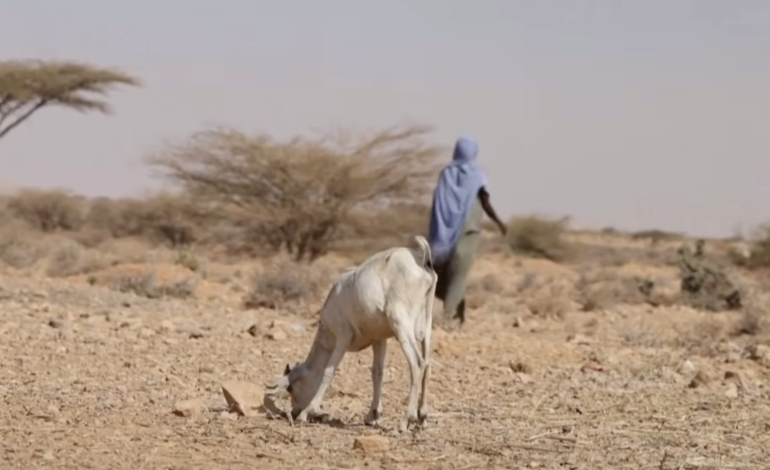

Families in Somalia are confronting a new catastrophe, with hunger and humanitarian needs soaring, a worsening drought, and aid levels at unprecedented lows, warnes Save the Children in a report.
The new report When Aid Disappears, Childhood Disappears Too, says the collapse of international aid funding to Somalia in 2025 may soon lead to catastrophic outcomes for children.
The impact has not been seen since the 2011 famine, which killed over 257,000 people, it warned.
Early in 2025, an estimated 3.4 million people were facing crisis-level food insecurity which a year later, has almost doubled with a projection of 6.5 million people, according to the report.
The report indicated that the upsurge is directly correlated with massive cuts in international funding as well as the predicted poor October-December 2025 rains.
Meanwhile, in 2024, Somalia’s Humanitarian Response Plan was 57.7% funded, which, while still below overall needs, was sufficient to sustain critical programmes, it said adding that in 2025, coverage fell to just 28.8%.
Now, in April 2026, only around 15% of the response plan is funded – the lowest level on record at this time of the year.
Save the Children’s Country Director for Somalia, Mohamud Mohamed Hassan, said the situation is not showing a slow deterioration rather a preventable crisis unfolding right now.
“In Somalia, the crisis is the result of a dire combination of protracted conflict and accelerating climate shocks, compounded by the decision to cut aid to record low levels in 2025,” he said.
As to the detector the choice was not inevitable; it had predictable, deadly consequences.
The report noted that food and nutrition services have been heavily reduced – including the closure of more than 300 nutrition facilities across the country, which are critical for treating child hunger and malnutrition – and preventive programmes have been significantly scaled back.
Without immediate funding, the agency said, more treatment centres will close, supply chains will be disrupted, and children in need of care will be turned away.
At the same time, conflict in the Middle East risks further strain on global supply chains, increasing the likelihood of delays and shortages.
Drawing on lessons from the past 15 years, this report warns that current funding cuts risk reversing hard-won progress, including gains in immunisation and reductions in child mortality, noted Hassan.
Without immediate additional funding, the director warned that more treatment centres will close, supply chains will break, and children who could have been saved will simply be turned away.
“Funding must return now to protect children, prevent the crisis from worsening, and uphold the principle of “never again,” he stressed.
The report also revealed that while Somalia’s children have grown up under the shadow of repeated crisis – such as the famine of 2011, recurrent droughts, conflict, and disease outbreaks – families have also shown extraordinary resilience.
This includes sharing resources, improvising to meet basic needs, and supporting one another even when formal aid has been delayed, insufficient, or absent.
The report confirms that while Somali families endure with remarkable strength, sustained external support is essential to prevent avoidable suffering and protect the next generation.
Related Stories


Related Stories


Discover more from Matter Zone
Subscribe to get the latest posts sent to your email.