




Africa’s domestic capital base exceeds external financing flows: AFC Report
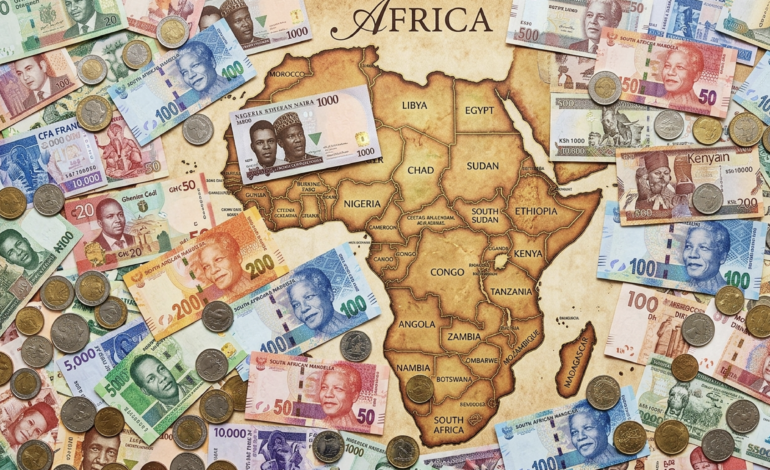

Africa’s domestic capital base has reached a scale that now exceeds external financing flows over the past decade.
This is according to the State of Africa’s Infrastructure Report 2026 of Africa Finance Corporation (AFC) that signals a turning point in how the continent funds its growth and industrialisation.
The report finds that cumulative external flows to Africa totalled approximately $1.7 trillion between 2014 and 2024, while Africa’s non-bank domestic capital pools exceed $2 trillion.
African capital now has a stronger foundation to play a significantly larger role in financing the continent’s development, implied the report has been launched at The Africa We Build Summit Thursday in Nairobi, Kenya.
The report argues that the overarching development priority has shifted from capital mobilisation to intermediation. This converts savings into infrastructure, industry, and productive investment at scale.
“The constraint is no longer capital, it is intermediation,” Samaila Zubairu, President and CEO of AFC, said at the Summit opening.
“We have the savings, but not yet the systems to channel them into infrastructure and industry at scale,” he said adding that “closing that gap is now Africa’s most important economic task. The next phase of Africa’s infrastructure story must move beyond standalone assets towards integrated systems.”
The report shows that official development assistance fell from $83.8 billion in 2020 to $73.5 billion in 2023, with further declines expected for 2025–2026, while sovereign issuance dropped from over $29 billion in 2018 to $4–6 billion annually in 2022–2023, with only limited recovery through 2024–2025.
The domestic pension and insurance assets crossed $1 trillion for first time. Central bank in the continent reserves at $530 billion in 2025, from $480 billion in 2024.
The report that reviews the continent’s mineral says gold now represents ~17% of reserves, up from less than 10% in 2022–2023.
Africa’s biggest infrastructure opportunity lies in integrated systems, indicates the report that the industry connects energy, transport, industry and digital layers intodemand‑anchored ecosystems that improve bankability and enable scale
Africa also stool resilient to recent shocks from Russia–Ukraine war to the 2026 Gulf crisis. These global incidents underscored the cost of fragmented systems and the urgency of building domestic processing, storage, and supply-chain resilience.
The continent continues to import over 70% of its refined fuel and faces an estimated $230 billion annual import bill across essential goods including fuel, food, plastics, steel, and fertiliser, according to the report.
In digital infrastructure, while connectivity has expanded rapidly, the next opportunity lies in building the “missing middle”—terrestrial backbone networks, metro fibre, data centres, Internet Exchange Points, and enterprise platforms that convert connectivity into productivity, services exports, and job creation.
Across all sectors and African countries, the report’s sets consistent conclusion where the development challenge is increasingly institutional and systemic. Capital exists, and infrastructure assets are expanding.
The report shades optimism as the next breakthrough will come from linking finance, energy, transport, industry, and digital systems into coherent ecosystems capable of supporting growth at scale.
“Africa is not capital-poor—it is capital-rich but system-poor,” noted Zubairu stressing on priority to build the institutions, instruments, and project pipelines required to deploy that capital into infrastructure and industry at scale.
The Africa We Build Summit 2026 brought together leaders to shift from planning to implementing projects, focusing on regional connectivity and innovative financing with a focus on accelerating Africa’s infrastructure development and socio-economic transformation.
Related Stories


Related Stories


Discover more from Matter Zone
Subscribe to get the latest posts sent to your email.