




Morocco, Spain move to build Strait of Gibraltar tunnel
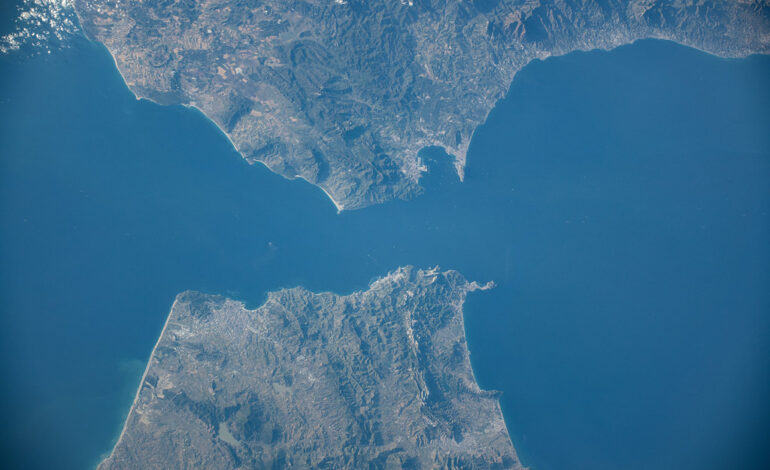

Morocco and Spain have initiated preliminary plan to building a submarine tunnel under the Strait of Gibraltar with an estimated completion period between 2035 and 2040.
The two countries have established a memorandum of understanding (MoU) to jointly analyze seismicity and geodynamics of the strait, nearly half a century later after initiating to explore a fixed link between Africa and Europe.
Spain’s Transport Minister Óscar Puente and his Moroccan counterpart, Karim Zidane, met on December 4, 2025 at La Moncloa to formalize the agreement.
The Spanish government approved in March a new transfer of €1.73 million to finance technical studies for the infrastructure, reported OKDiario.
The project is reportedly being developed through SECEGSA, the Spanish Company for Studies on Fixed Communication across the Strait of Gibraltar, a public company created in the 1980s to advance the tunnel’s construction.
The planned submarine tunnel would stretch approximately 65km in total, where around 40km would run under Spanish territory. The northern entrance would be located near Vejer de la Frontera.
The distance between terminal stations would be 42km, with 38.5km of actual tunnel length. Of that, 27.7km would be the submarine section. The deepest point would reach 475 meters, with a minimum rock cover of 175 meters and a maximum gradient of 3%.
The infrastructure would consist of two independent single-track railway tubes, each with a circular cross-section of 7.90 meters in interior diameter. A central service gallery of 6 meters in diameter would run between them for emergencies and maintenance.
Cross-passages of 6 meters in diameter would connect the tubes every 340 meters. A Secure Parking Zone would be built at the tunnel’s lowest point, equipped with stop zones, safety areas, intervention zones, and a smoke extraction gallery.
SECEGSA commissioned a feasibility study from Herrenknecht Ibérica, the Spanish subsidiary of the German tunneling machinery manufacturer. The study focused on whether it is technically possible to bore through the Umbral de Camarinal, an underwater ridge separating the Mediterranean Sea from the Atlantic Ocean.
Accordingly, Herrenknecht confirmed the project is technically viable within current engineering limits, though it warned the execution would involve enormous logistical and economic challenges.
The MoU was signed between Morocco’s National Center for Scientific and Technical Research (CNRST), and Spain’s National Geographic Institute.
Related Stories


Related Stories


Discover more from Matter Zone
Subscribe to get the latest posts sent to your email.