




External powers influence Africa’s political, security, dev’t landscape: Regional dialogue
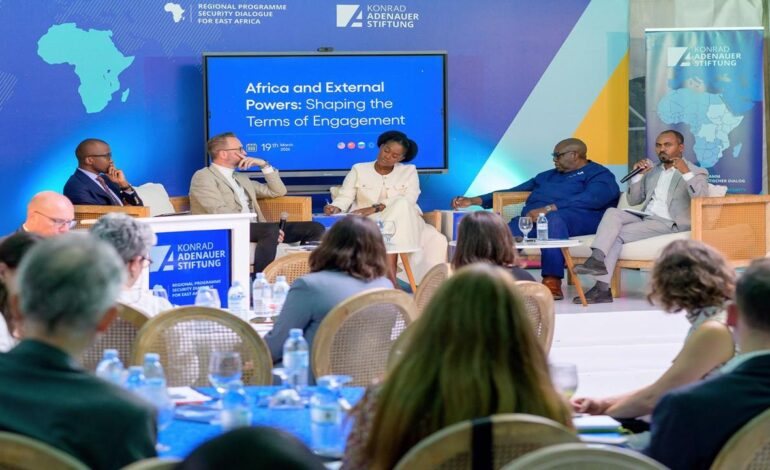

Regional dialogue has identified growing external powers shaping Africa’s political, security, and development landscape.
A policy dialogue held in Kampala on March 19 by Konrad Adenauer Stiftung’s Regional Program Security Dialogue for East Africa highlighted growing concern on political, security, and development across the continent.
Opening the discussion, Director Nils Wörmer emphasized the need for African institutions to respond strategically to shifting global power dynamics.
Debates on sovereign access to natural resources, development cooperation, and peace and security are becoming central to Africa’s engagement with international partners, says the platform.
Former Kenya ambassador to Germany Tom Amolo observed that global politics is moving from rule-based cooperation toward more transactional relationships, urging African states and the African Union (AU) to strengthen coordinated responses.
Asrat Gizachew from Ethiopia’s Institute of Foreign Affairs, indicated the importance of balancing new partnerships while safeguarding existing alliances amid regional security pressures.
Peace and governance expert Cynthia Chigwenya stressed Africa’s rising role in global agendas such as climate policy, while warning that limited institutional visibility continues to weaken unified continental positioning.
She also pointed to recent withdrawals of Burkina Faso, Mali, and Niger from ECOWAS as signals of regional integration challenges.
Participants concluded that stronger coordination among African institutions is essential to ensure external engagement supports African-led peace, development, and strategic autonomy across the continent.
Related Stories


Related Stories


Discover more from Matter Zone
Subscribe to get the latest posts sent to your email.