




Cassava faces major climate change risk in Africa finds study proposing solutions
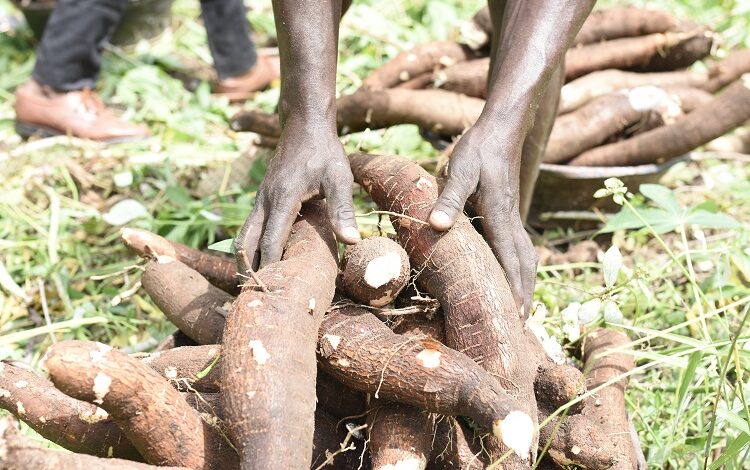

A study found that the very climate changes that open new territories for cassava cultivation also create conditions favourable for its most destructive disease.
Over half of Africa is currently suitable for cassava farming. This could grow to nearly two thirds of the continent’s land area in future, according to a report published on The Conversation by Geofrey Wingi Sikazwe, a Lecturer in the Department of Mathematics, Physics and Informatics, University of Dar es Salaam.
Sikazwe said his team predicted and map where cassava and cassava brown streak disease might spread between now and 2080 using computer models and climate data.
The disease already affects 33.7% of cassava production, but about 56.6% of the continent is at risk of the disease spreading, he wrote.
“But we also found areas where cassava will thrive and the disease will remain constrained,” he said.
The research team proposes that heat tolerant and disease resistant cassava must be planted across all cassava production regions.
Areas like the DRC and zones along the Sahel belt that are not suitable for the cassava brown streak disease must be planted with the improved cassava to create production zones relatively insulated from disease pressure.
Areas where cassava is already experiencing high disease outbreaks must be replanted, the researchers advises adding that it must be coupled with stricter national and international border controls on plant material movement.Share artiicle
Cassava is a starchy, tuberous root, introduced to sub-Saharan Africa by Portuguese traders centuries. It is a nutrition lifeboat for over 800 million people worldwide.
Sub-saharan Africa contributes over 63% of the world’s total cassava production. Nigeria alone grows over 20% of the world’s cassava, which is also the continent’s second most important staple food crop. It can produce a reasonable harvest even when soil quality is poor, rainfall is low, or when it has not been fertilised much.
Related Stories


Related Stories


Discover more from Matter Zone
Subscribe to get the latest posts sent to your email.